
Designing Clarity in a Complex Service
UXUI Design | UX Writing | SaaS
ScanSoles is a foot-scanning data service that enables orthopaedists to receive precise patient data via smartphone. Although sign-up interest was high, adoption dropped sharply after registration due to unclear value communication and workflow ambiguity. I was brought in to diagnose the root causes of this friction and redesign key touchpoints — particularly the sign-up and dashboard experiences — to build trust and clarity.
The redesigned experience clarified the service model, reduced cognitive friction, and improved confidence among expert users, leading to higher sign-ups, smoother adoption, and stronger alignment with the new brand identity.
- Client: ScanSoles
-
Scope: Redesign orthopaedist sign-up webpage, app onboarding flow, and dashboard
-
Constraints: Limited access to real users and relied on team feedback and insights
-
Tools & Methods: Stakeholders interviews, assumption-first approach journey mapping, wireframing (low-fi) and iterative prototyping
Discovery phase
I closely collaborated with the ScanSoles team who shared insights from existing data and learned from their customer support team I disocovered that:
- Users dropping off after registration without using the serivce
- There were a lot of users contacting the customer support team about shop code
- There were a lot of users trying to sign up in the app which was primarily designed for patients user only
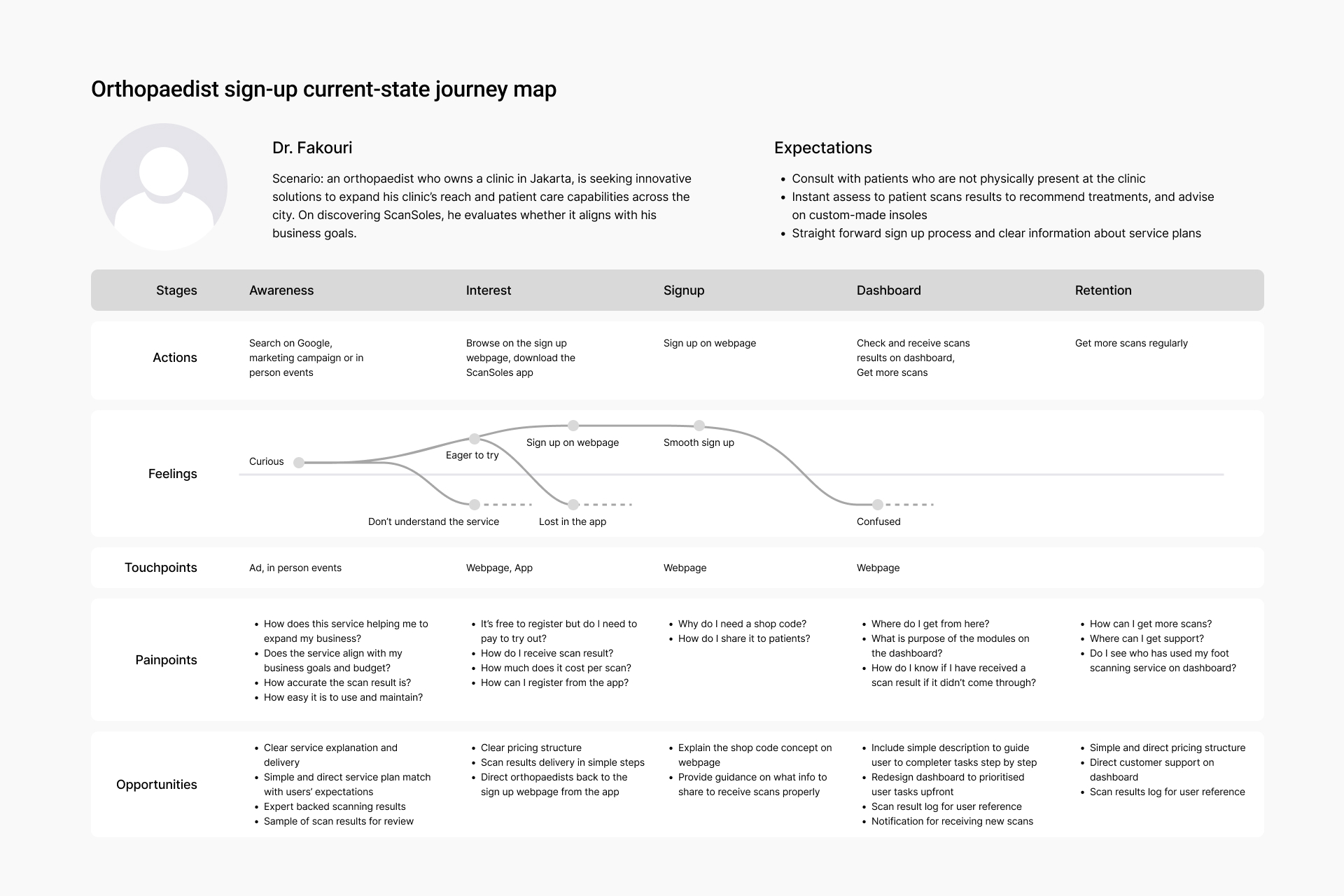
After that, a heuristic evaluation of the existing sign up journey was done. Reviewing from the signup page and dashboard to the ScanSoles app, I discovered potential roadblocks in the journey:
-
The process for receiving foot scans was not clearly explained on the sign-up webpage, leading to confusion
-
The “shop code” concept which is required to receive scans, was missing from the webpage and lacked explanation
-
A complex pricing structure on the sign-up page created barriers for new users
-
The dashboard post sign-up overwhelmed new users with many modules unrelated to their primary needs
Design Process
Ideation & wireframing
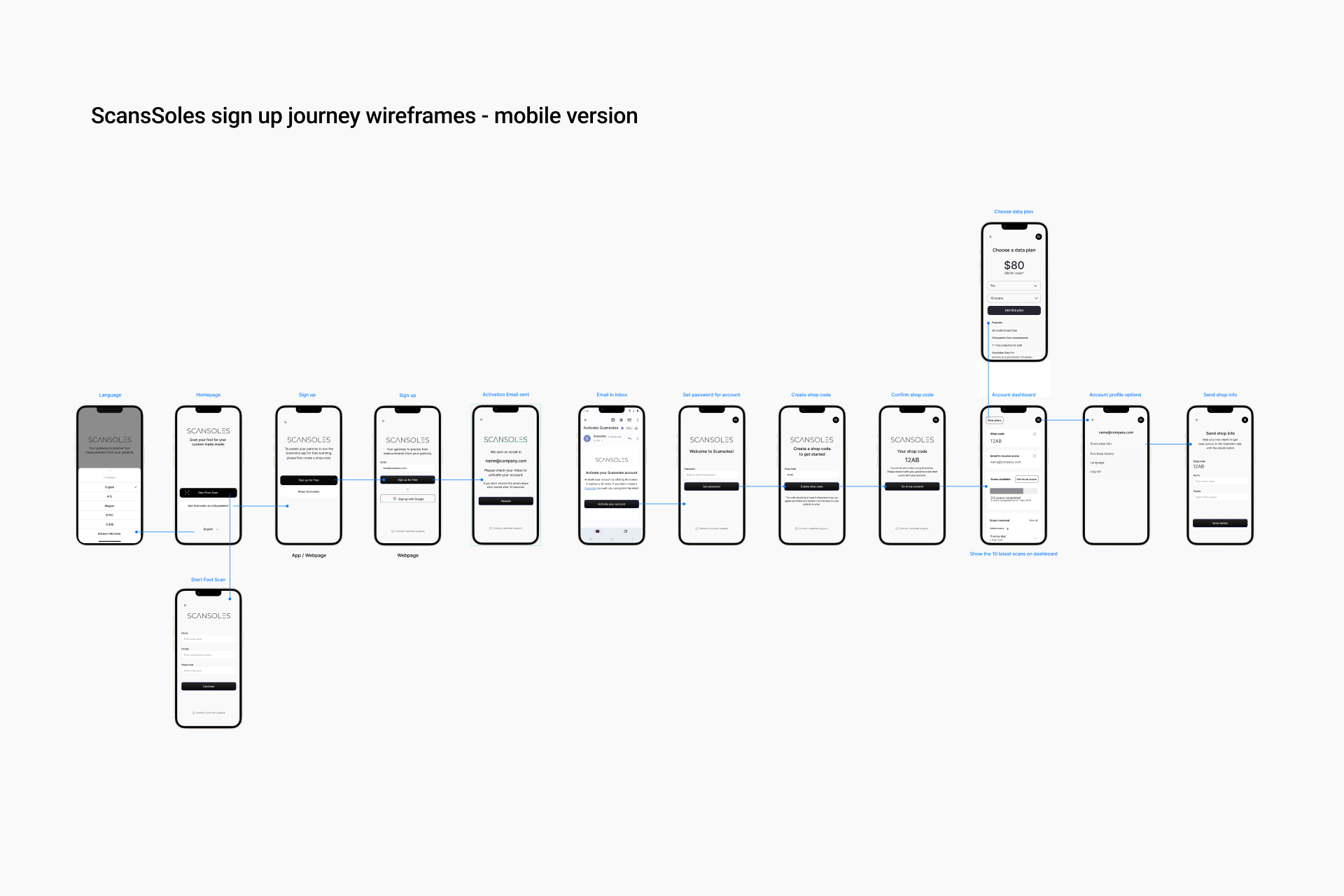
After gathering insights from interviews, I started to synthesize user needs and business goals to generate clear design solutions. I brainstormed creative ways to address the key pain points and translated these ideas into low-fidelity wireframes, focusing on structure, layout, and user flow rather than visual details.
These wireframes served as a blueprint to visualize how orthopaedists would navigate the sign-up journey, highlighting essential tasks and simplifying complex concepts like receiving scans and shop codes.
I actively seek feedback from the team to ensuring user clarity and alignment with project goals before progressing to higher-fidelity design stages. This process enabled quick experimentation and validation of user flows, setting a solid foundation for the final interface.
Key Solutions & Features Implemented
| Pain Point | Solution | Benefit/Impact |
|---|---|---|
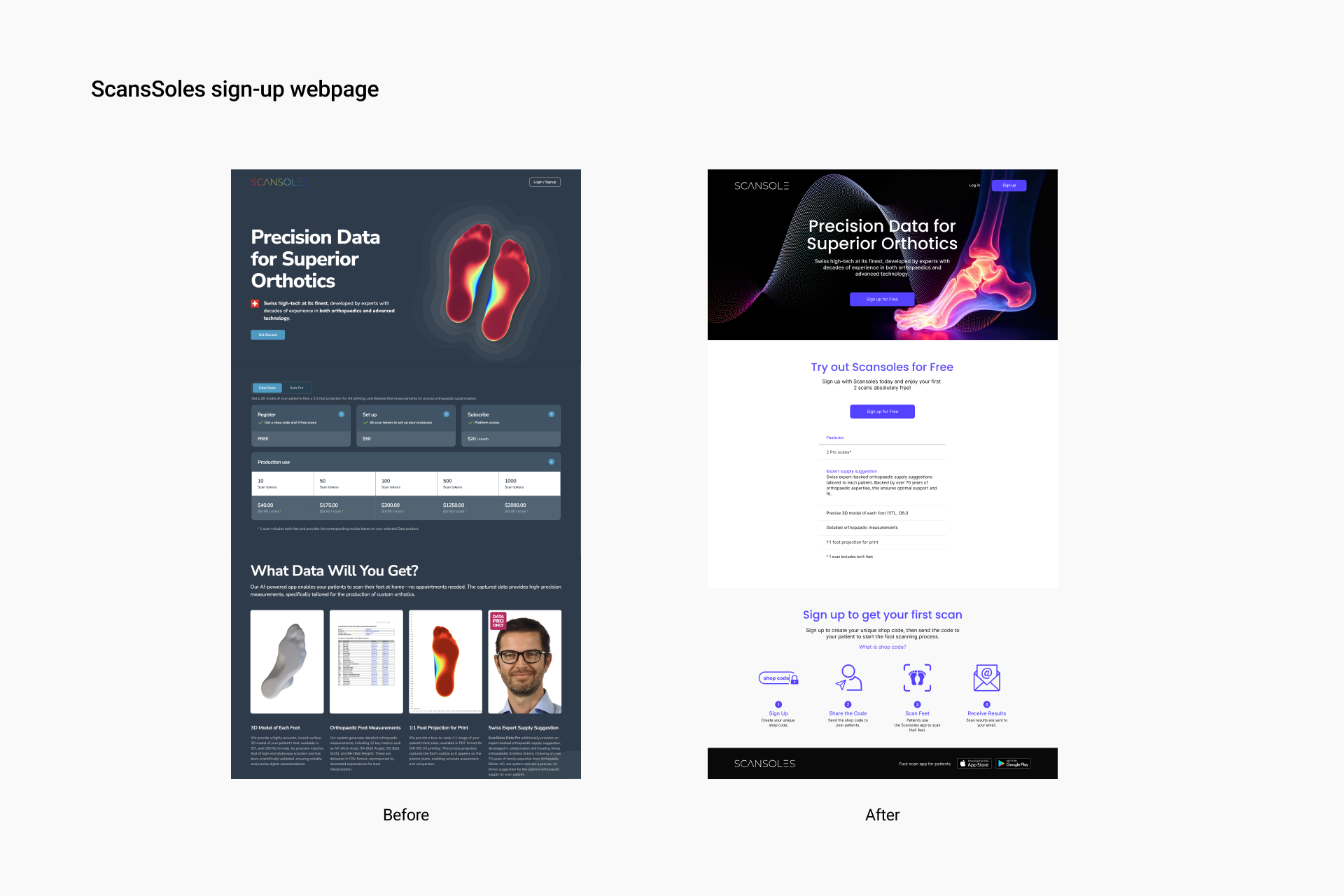
| 1. Confusing scan receiving process | Added clear 4-step guide with icons on sign-up page | Improved user understanding and reduced confusion |
| 2. Missing explanation of shop code | Introduced detailed shop code info upfront | Reduced support inquiries and enhanced transparency |
| 3. Complex pricing structure | Removed pricing from initial sign-up, showed pricing in dashboard | Lowered sign-up barriers, encouraged onboarding |
| 4. Cluttered dashboard | Prioritised dashboard content to key orthopaedist tasks | Improved usability and task completion efficiency |
| 5. Orthopaedists stuck in patient app flow | Created role-specific homepage instructions in app | Reduced drop-offs and streamlined onboarding |
A series of targeted improvements were designed to ensure orthopaedists remain engaged and progress smoothly through the sign-up process.
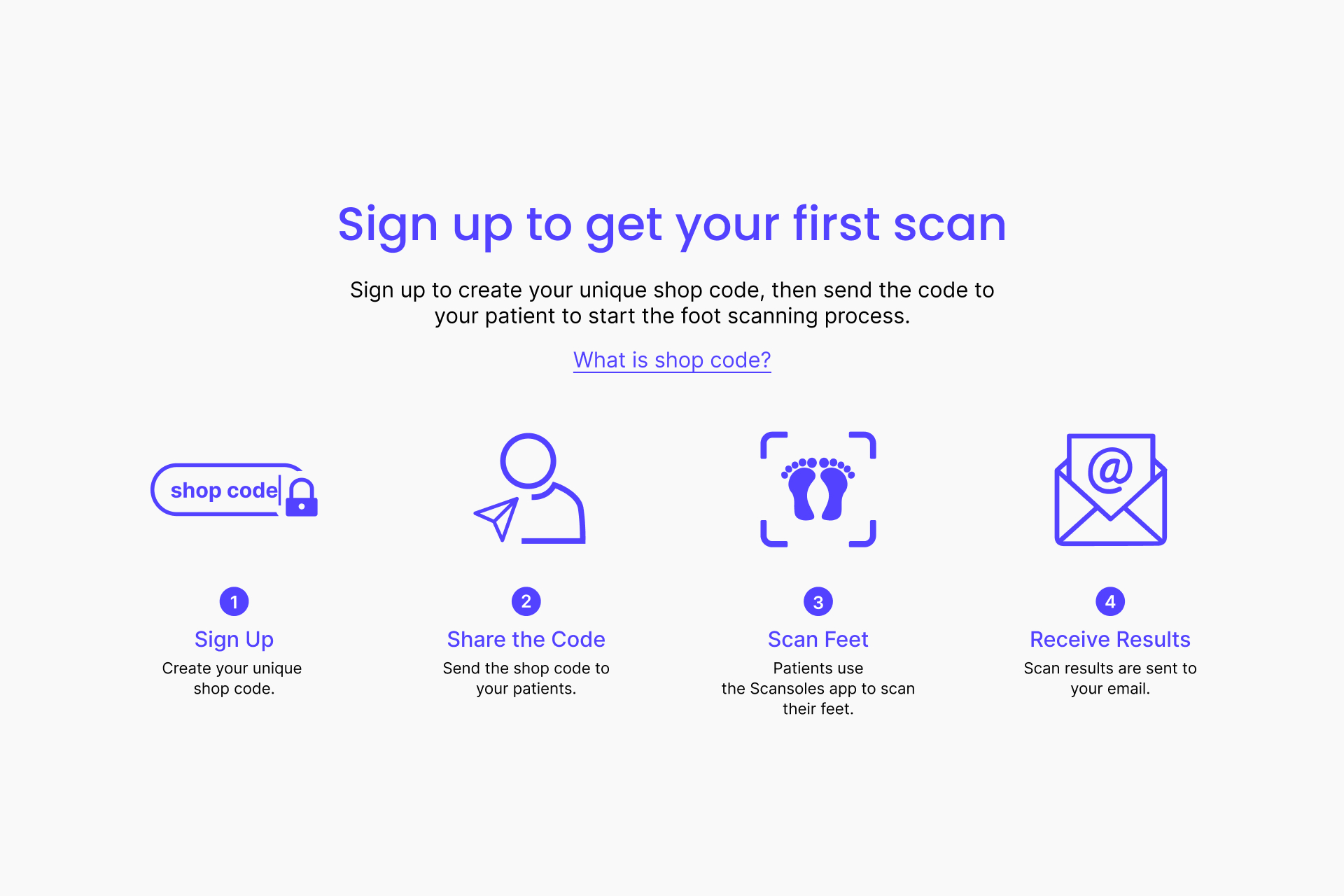
1. 4-step guide for receiving scans
The sign-up webpage is the first touchpoint for orthopaedists when registering. Although it provides detailed information about the scan results, it lacked an explanation of the actual process for receiving scans.
In the redesigned page, I added a simple four-step guide with icons to clearly illustrate how the scan delivery process works.
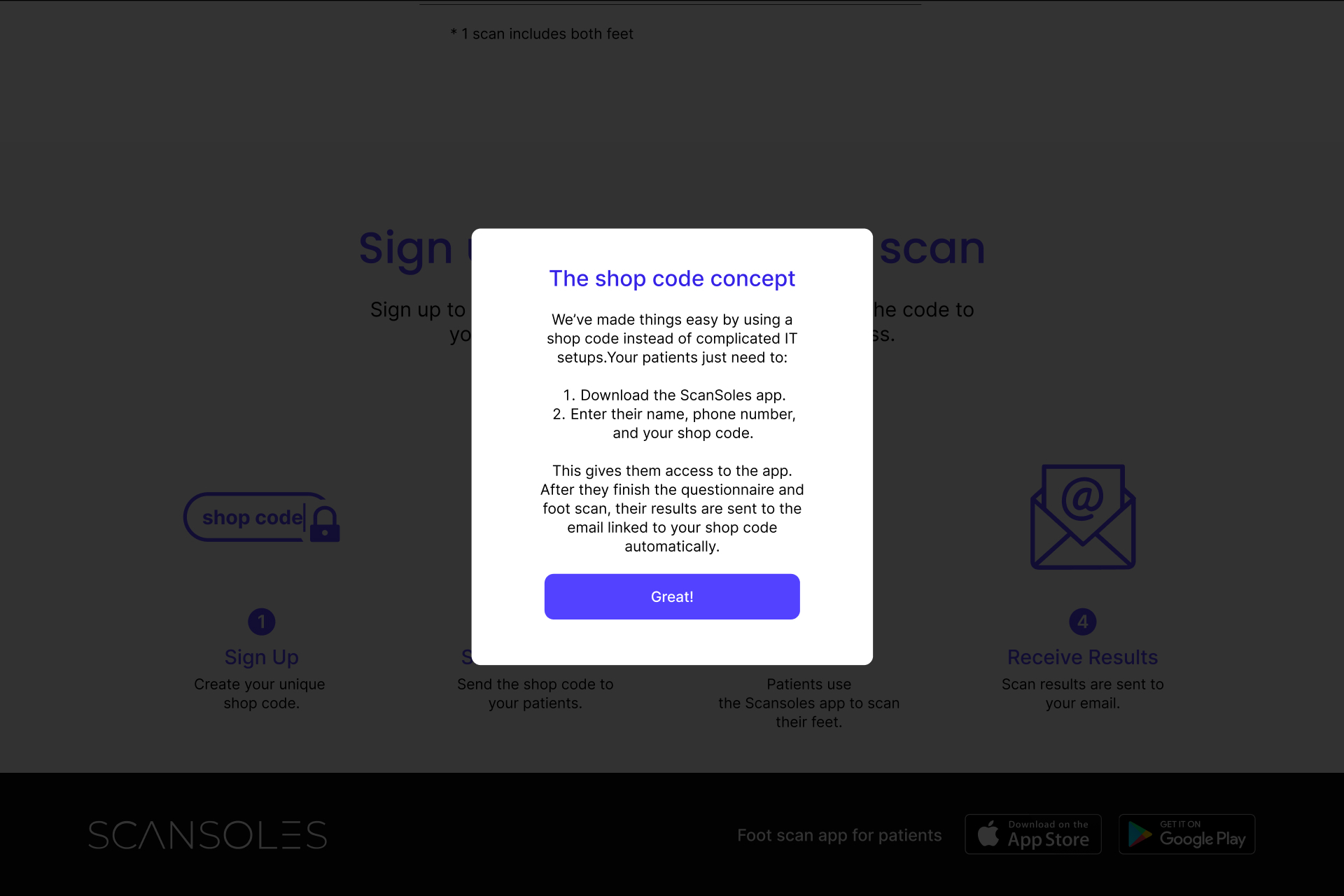
2. Make shop code concept available on sign-up webpage
The product features a unique shop code concept, requiring orthopaedists to create a shop code after signing up in order to receive scans. This important concept was missing from the original webpage and lacked explanation.
Adding clear details about the shop code on the webpage improves user understanding and helps reduce support inquiries.
3. Pricing Structure Simplified
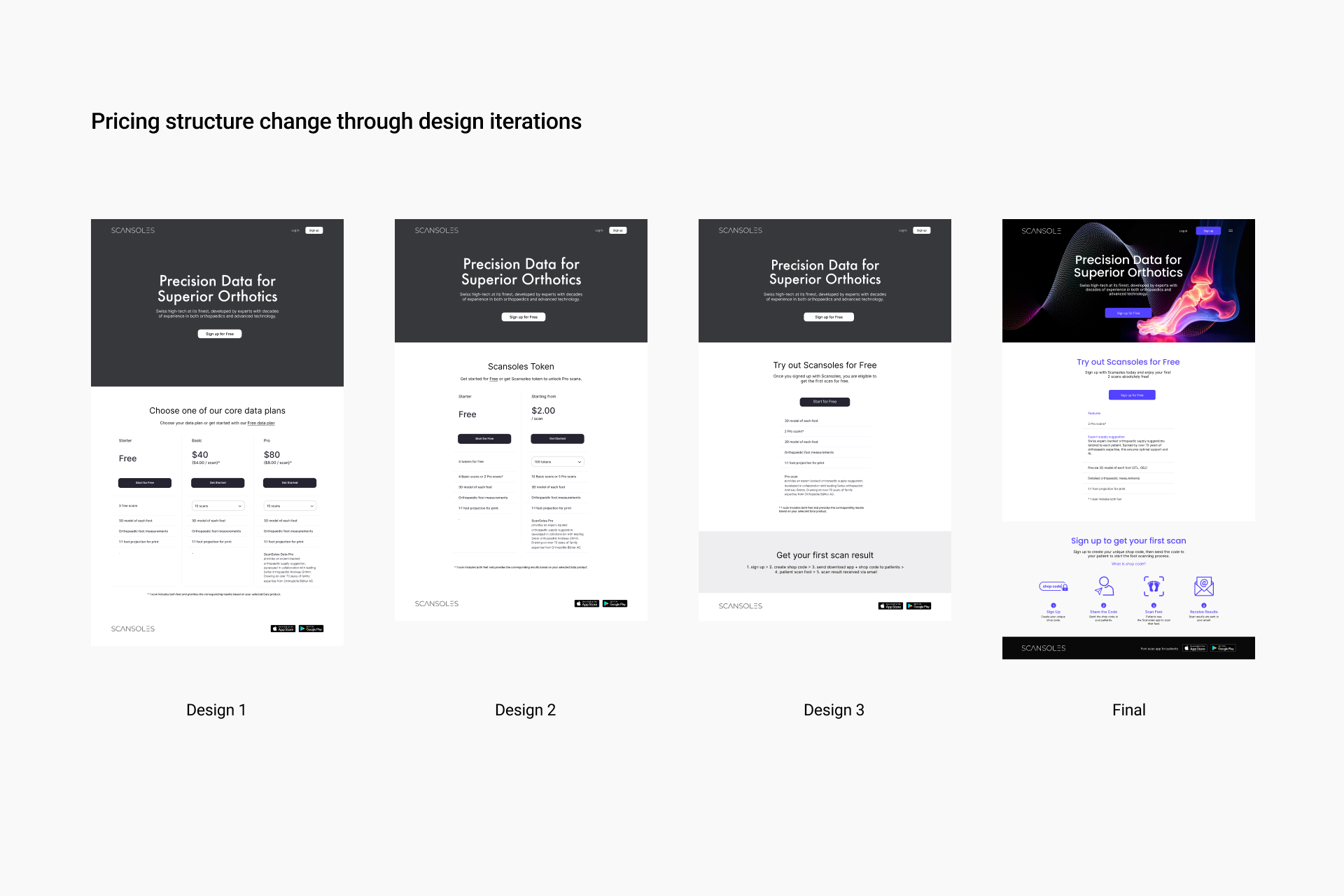
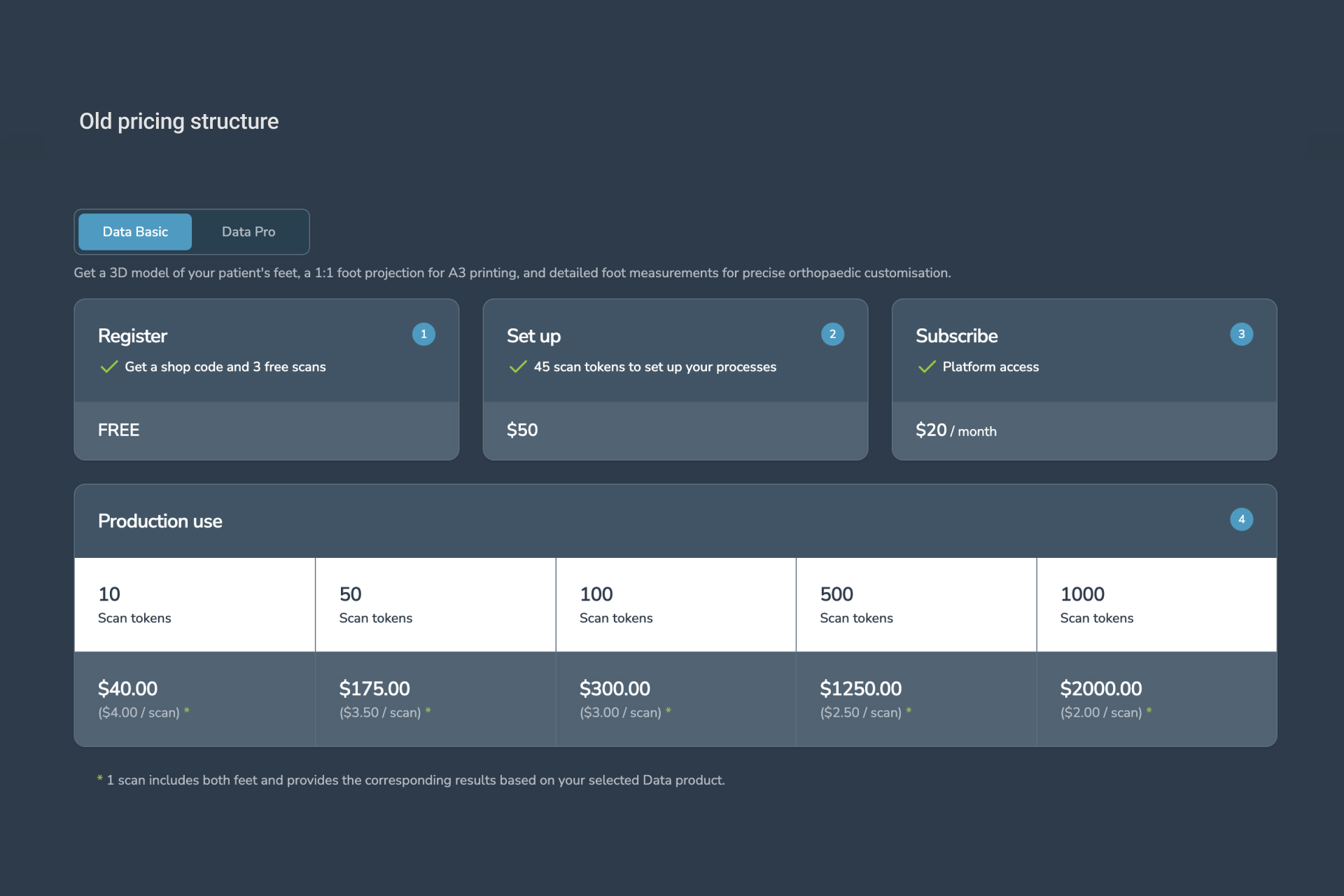
The old pricing structure was complex and confusing, creating a barrier for users to complete sign-up. After reviewing the pricing table, the ScanSoles team decided to simplify the experience by removing all prices from the initial sign-up page, offering free sign-up upfront.
Detailed pricing information is now accessible only within the dashboard after orthopaedists have completed their sign-up, enhancing clarity during onboarding.
4. Dashboard Redesign
In the previous dashboard, newly registered orthopaedists were presented with three separate modules for subscriptions and another for email updates. While this configuration offered information, it didn’t prioritise the key actions most first-time users want to accomplish is that to evaluate whether the product suits their needs. Although pricing was given significant dashboard space, it isn’t the primary concern during initial exploration.
I reframed the approach by asking: What tasks and information do orthopaedists actually value on their dashboard? Through analysis and consultation with the ScanSoles team, I identified the most important actions for orthopaedists:
• Switch between Pro and Basic services
• Update personal details
• Add more scan credits to their account
• View a log of received scans
Additionally, feedback revealed that many orthopaedists prefer to support their clients directly, often using WhatsApp for quick communication.
5. User-based journeys on ScanSoles app homepage
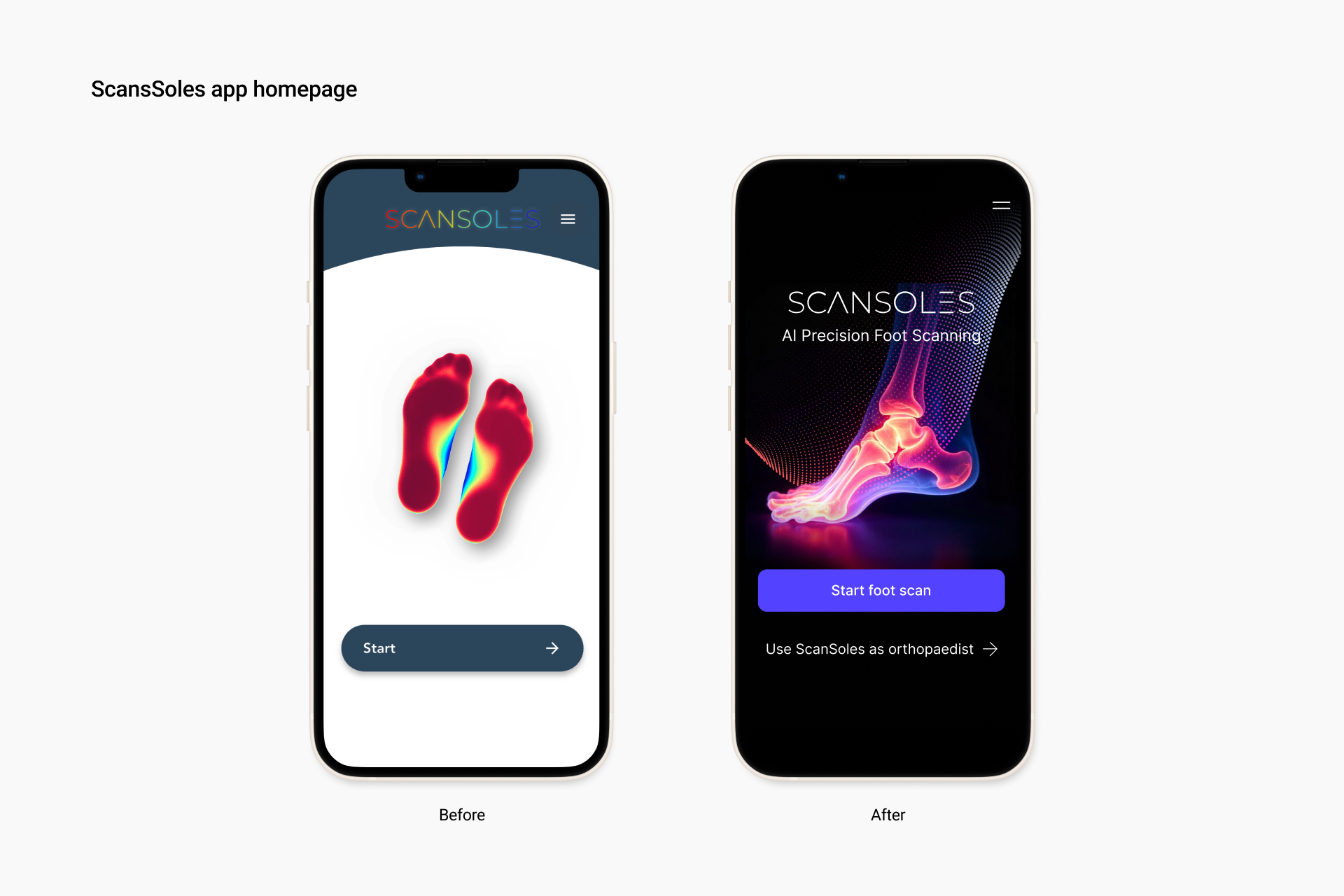
The ScanSoles app was designed primarily for patients to scan their feet, many orthopaedists found themselves stuck in the app after downloading without clear guidance to get back to the sign-up journey and leading to drop-offs.
To fix the broken flow, I proposed user-specific instructions on the app’s homepage, clearly guiding orthopaedists and patients to their paths. This helps orthopaedists continue signing up even if they downloaded the app by mistake, reducing confusion, improving retention, and streamlining onboarding for both groups.
Iterative testing
Due to limited access to real users, I conducted rapid iterative testing sessions with the ScanSoles team members who regularly support clients. While these internal sessions improved the design significantly, a key limitation was the absence of direct end-user testing at this stage, which means further iterations should be planned based on feedback collected after a wider public launch. This approach allowed for responsive refinement within constraints but highlighted the need for broader usability validation to ensure the design meets diverse orthopaedist needs.
Viusal design & Acessibility
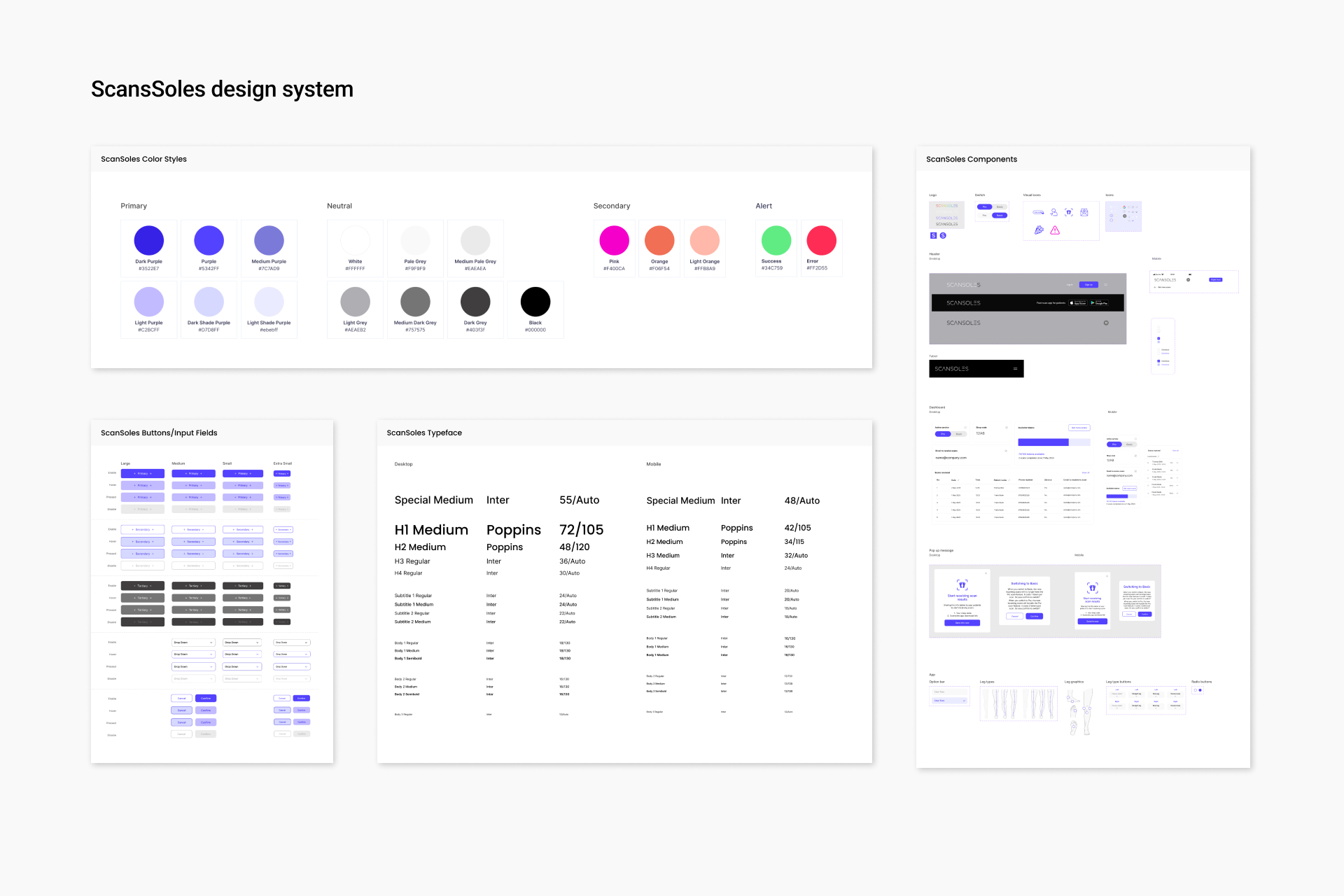
The final user interface embodies the ScanSoles brand with an emphasis on clarity, cleanliness, and a distinctly AI-powered aesthetic. Accessibility was built into the visual language through a light, high-contrast palette, readable typography, and clear iconography, ensuring WCAG AA compliance and usability in bright clinical environments. To support long-term growth, I established a comprehensive design system that maintains visual consistency, scalability, and accessibility throughout the ongoing development of ScanSoles.
Impact & Metrics
While the new sign-up journey is in active development, success will be measured by:
-
Increased number of successful orthopaedist sign-ups
-
Higher conversion rates from free users to paid accounts
-
Reduction in customer support queries specifically around scan receipt, shop code usage, and onboarding questions
-
Positive feedback from post-launch user surveys and interviews
The ScanSoles UX will be continuously enhanced by actively seeking user feedback to inform design iterations and introduce new features that better align with users’ needs. By creating a product that truly serves its users, ScanSoles is positioned to achieve greater business success.
Takeaways
I led the project from problem discovery to prototype, delivering a clearer and more intuitive sign-up flow despite limited research resources. This experience taught me the importance of flexibility in balancing user needs with business goals under constraints. It was also my first time taking on the UX writing role, crafting clear, task-oriented descriptions to guide users through the journey.
Close collaboration with the ScanSoles team enabled rapid iteration based on available feedback, resulting in a smooth onboarding experience for orthopaedists and aiming to boost sign-ups and reduce support requests. I’m excited to apply these learnings to future projects to drive meaningful impact.