Reducing biodiversity loss through birdwatching
RCA Final Project | 2020
I chose biodiversity loss as the theme of my final project at RCA during the lockdown in 2020. It all began with the happy memories of hiking with my father in the mountains, nature is just fascinating. Sadly, Earth’s species are disappearing at an alarming rate and yet, biodiversity loss seems to be jargon and lacking in people’s awareness.THE CHALLENGE
THE OUTCOME
Service Design | User Co-creation | Branding | UXUI Design | AR
Tools Google Form/Illustrator/Photoshop/After Effects/Keynote
Gathering the pieces
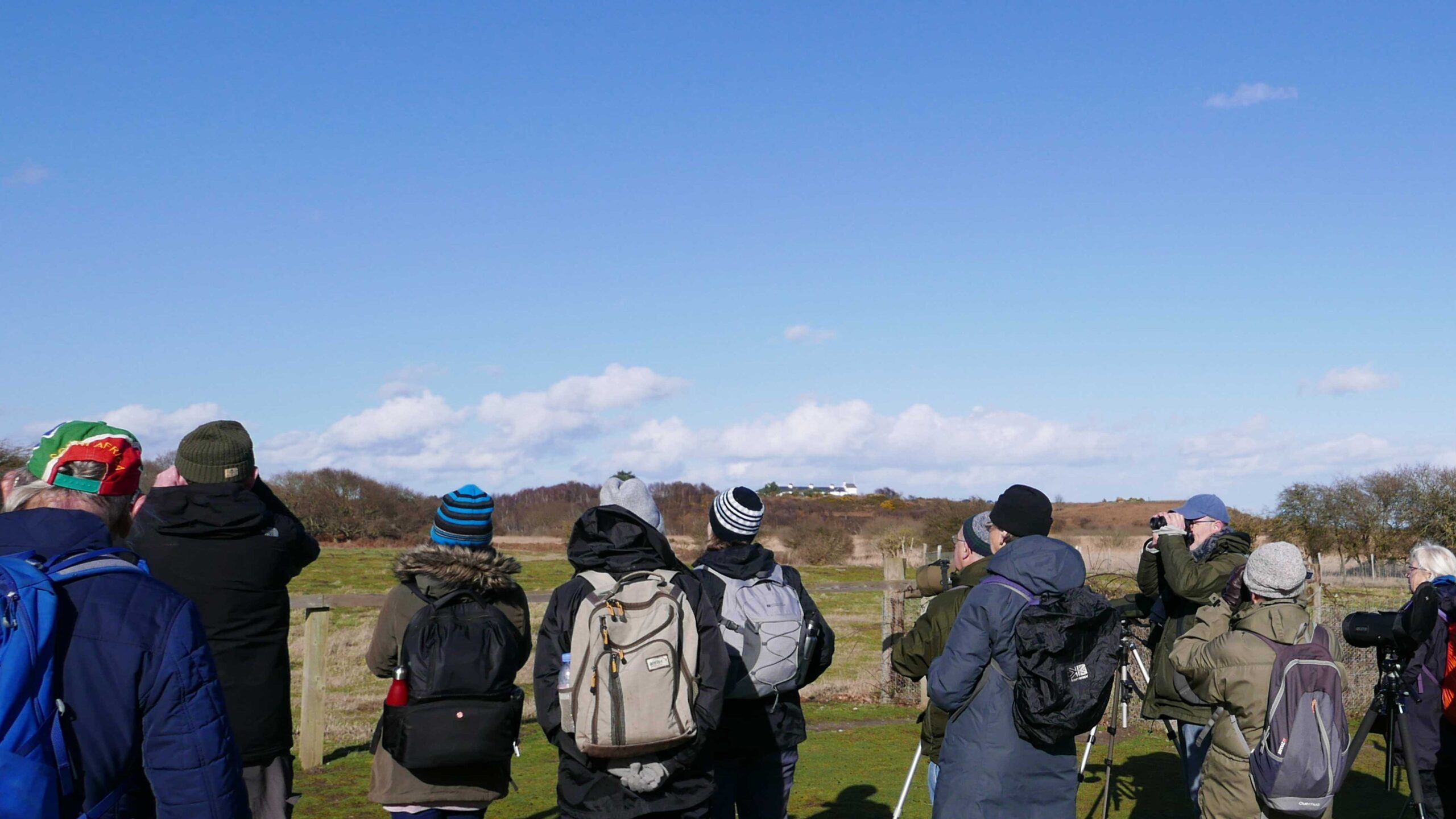
To dive into the world of birds, I got my first binoculars and became a birder. Before the lockdown, I went to talks and bird watching events. I had the chance to speak to birders, listened to their stories and found out what about birds that fascinated them the most and if they recognised the decline of birds population. When meeting in-person was not possible, I sent out tailored surveys to birders and neighbours to collect their thoughts, that included their experiences with birds, nature and their neighbourhood. I also conducted competitor analysis to better understand the existing offerings in the market. The insights I have got shaped the design direction of the project. Last but not least, I seek inspirations from the existing activities and offerings from friends and on the internet.How might we help children and families to appreciate the beauty of nature in neighbourhoods and connect with like minded locals for future local green initiatives through a series of continuous bird related and engaging activities?
Initial concept
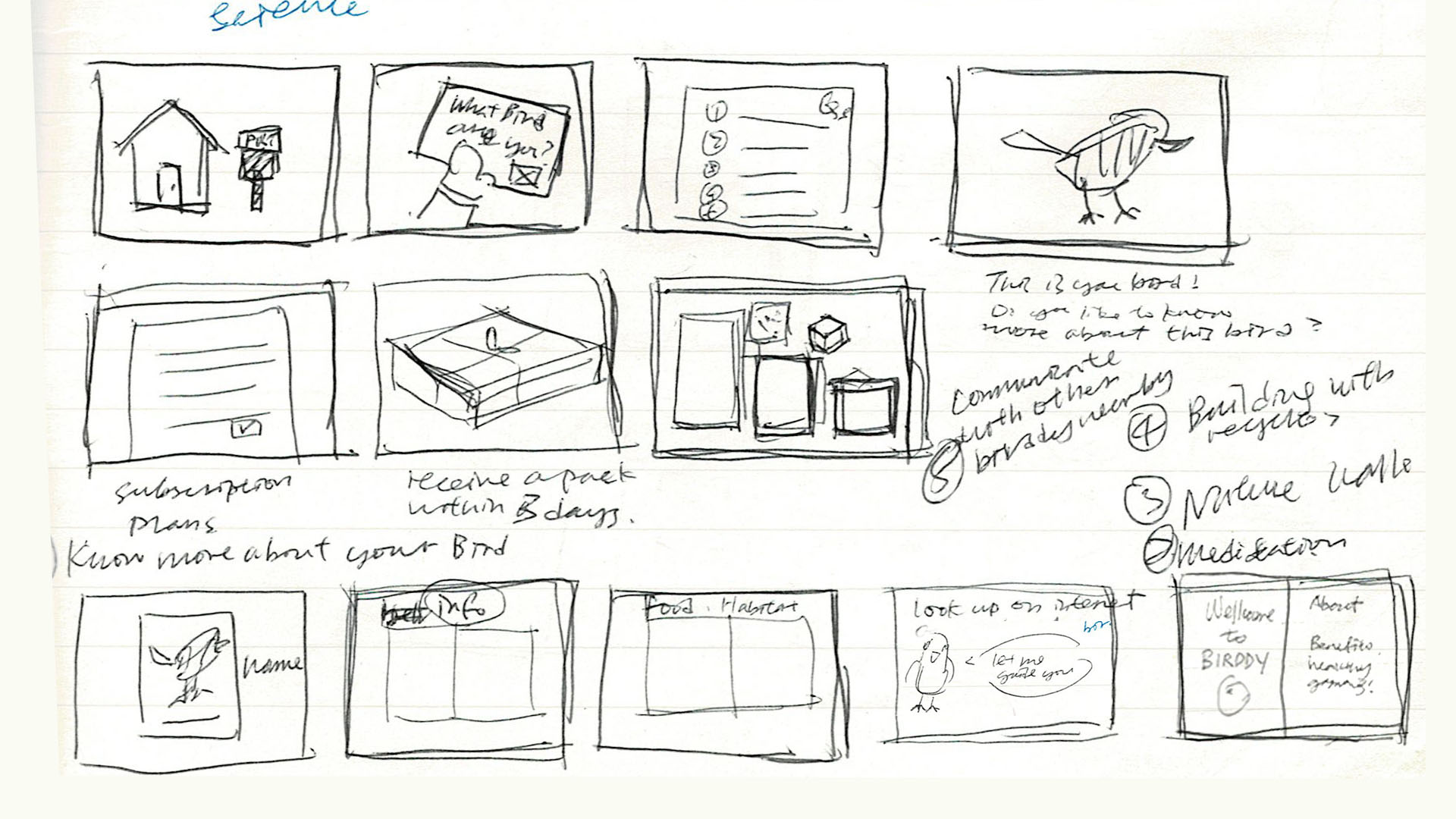
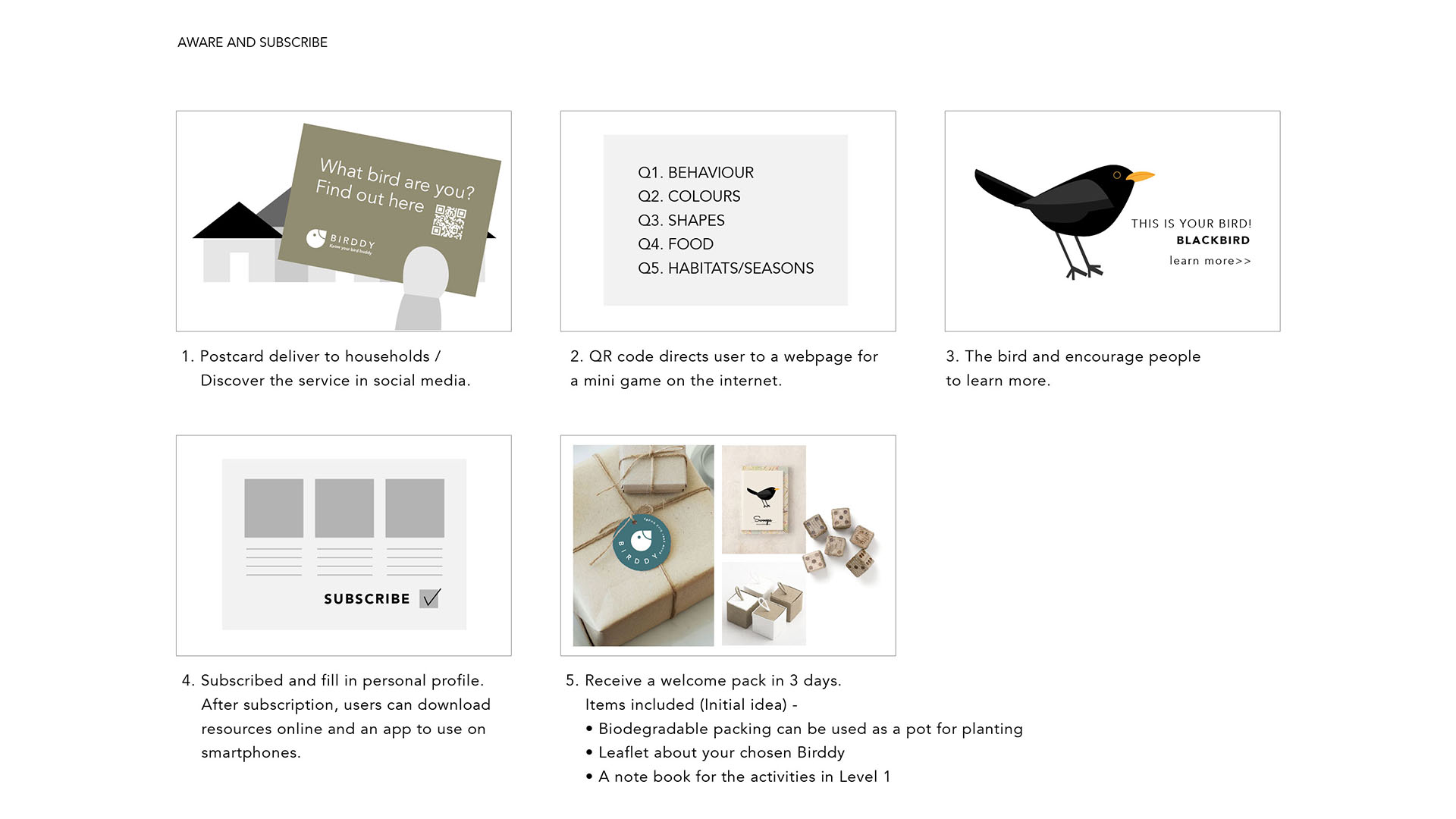
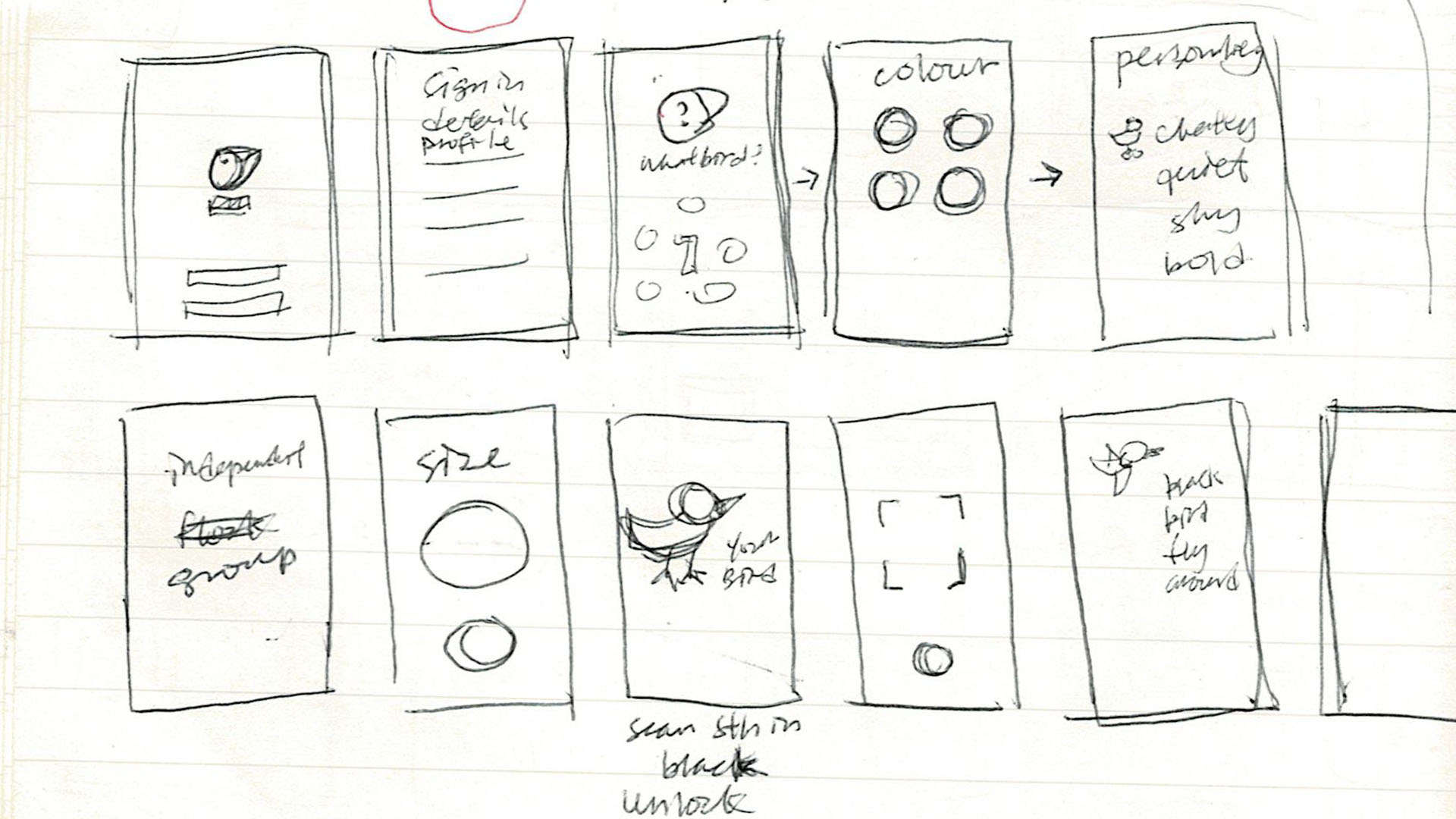
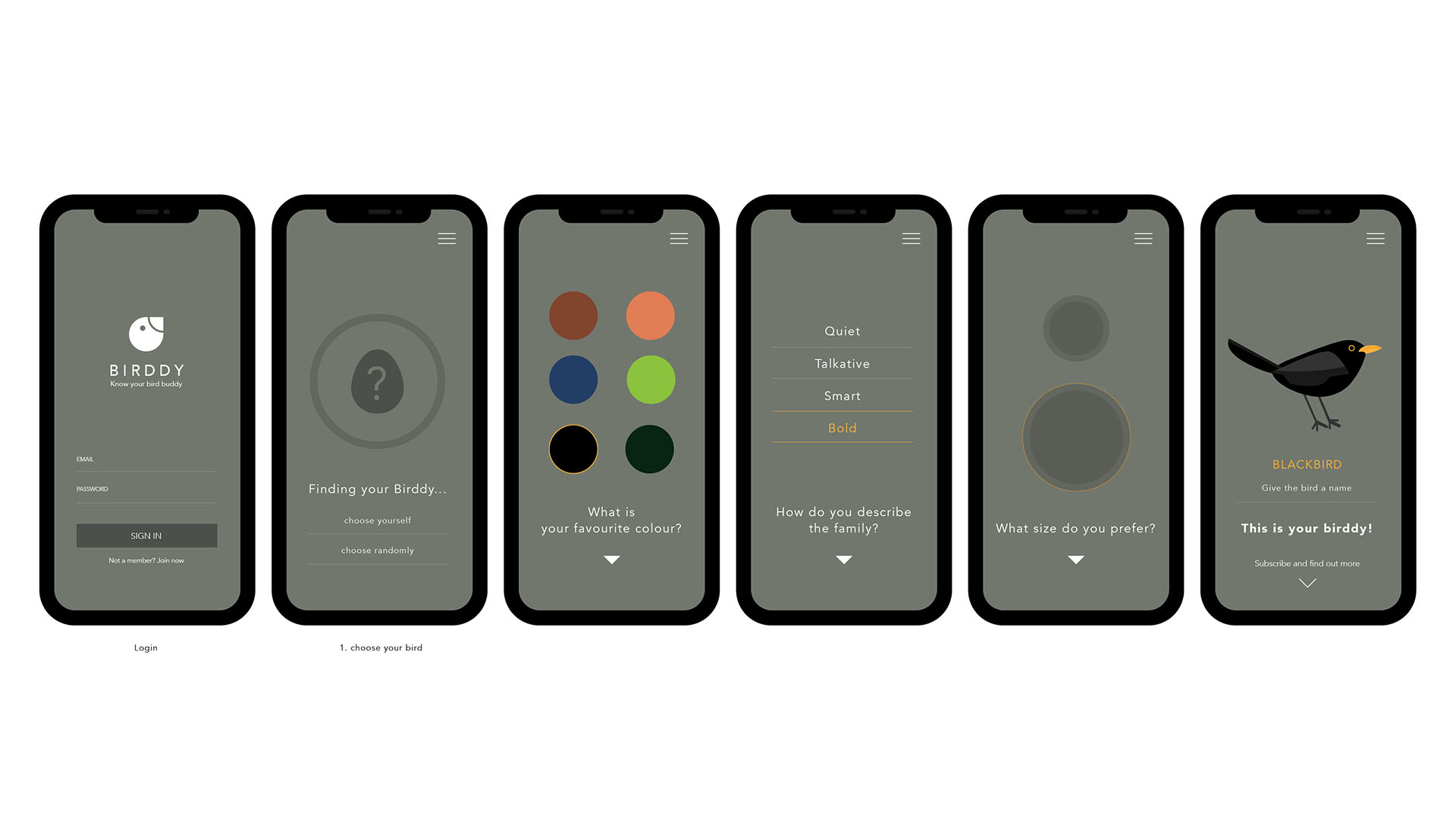
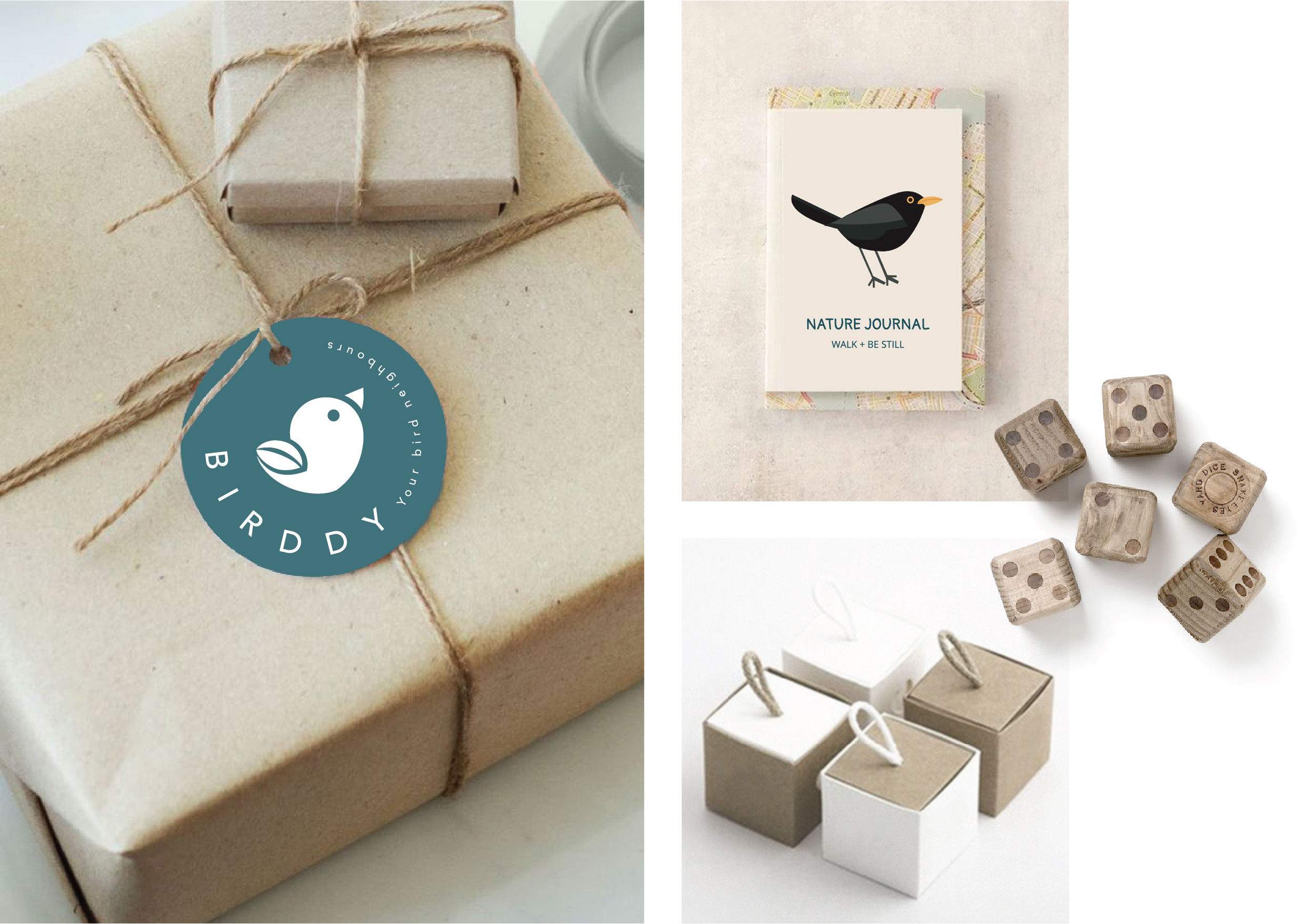
I drafted my concepts on paper before building the prototype on computer. I imagined how the families would be aware of the service and be engaged with the service, how they experience the service through digital and physical touch points.
1. The onboarding
Rolling out ideas to test
To validate my ideas, I sent out a testing kit to 5 families. I learned from the feedback what works well and what does not.
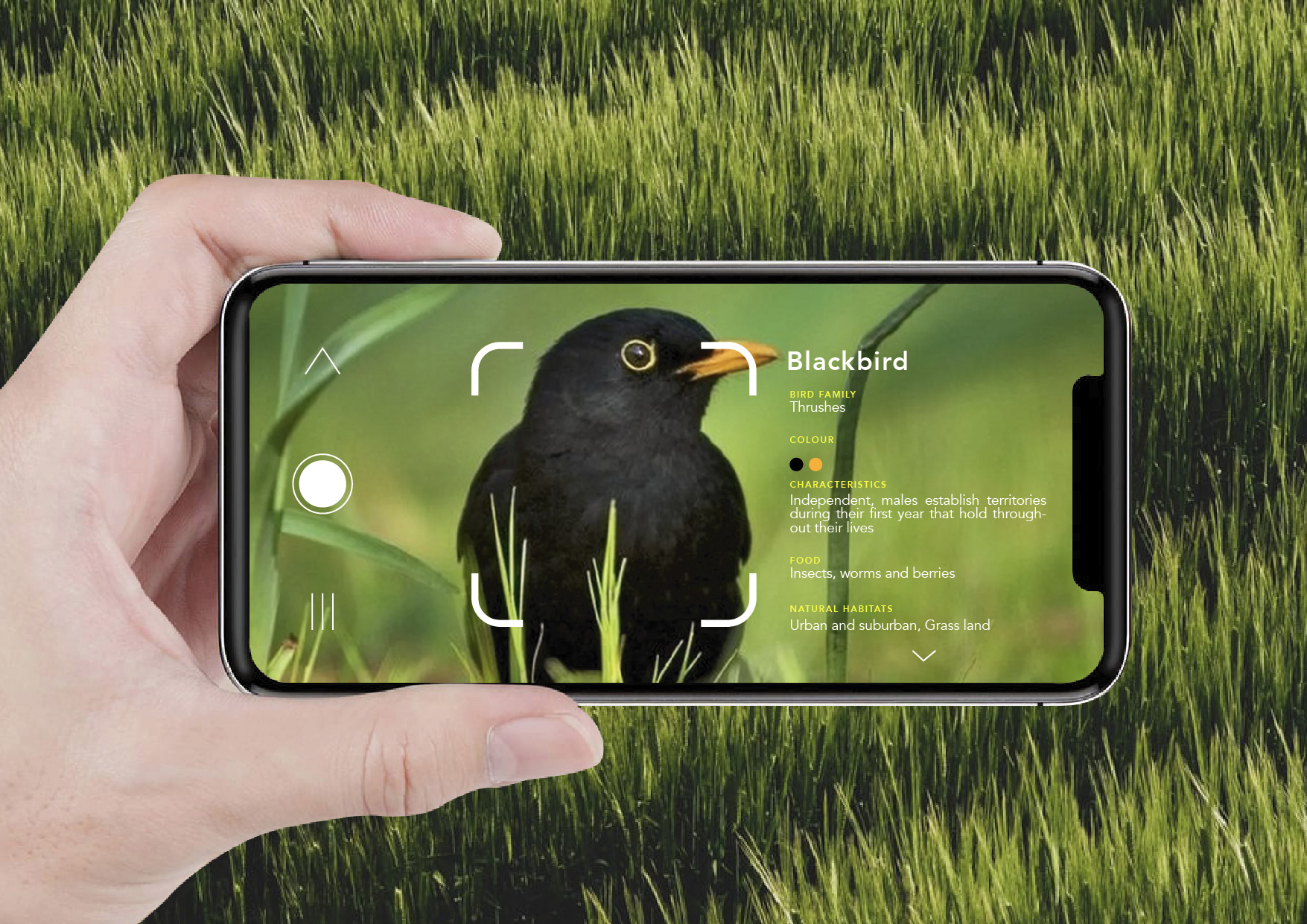
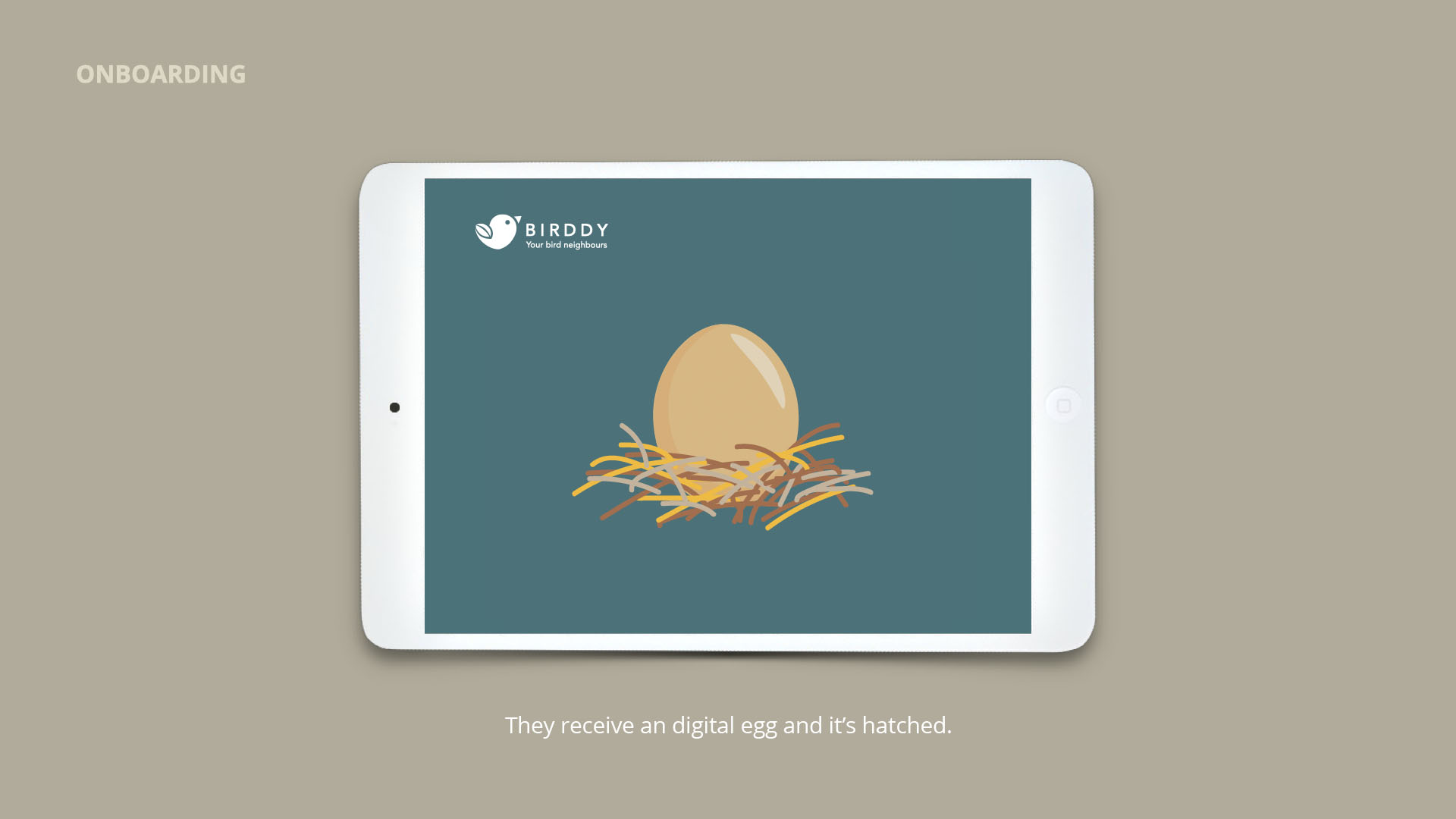
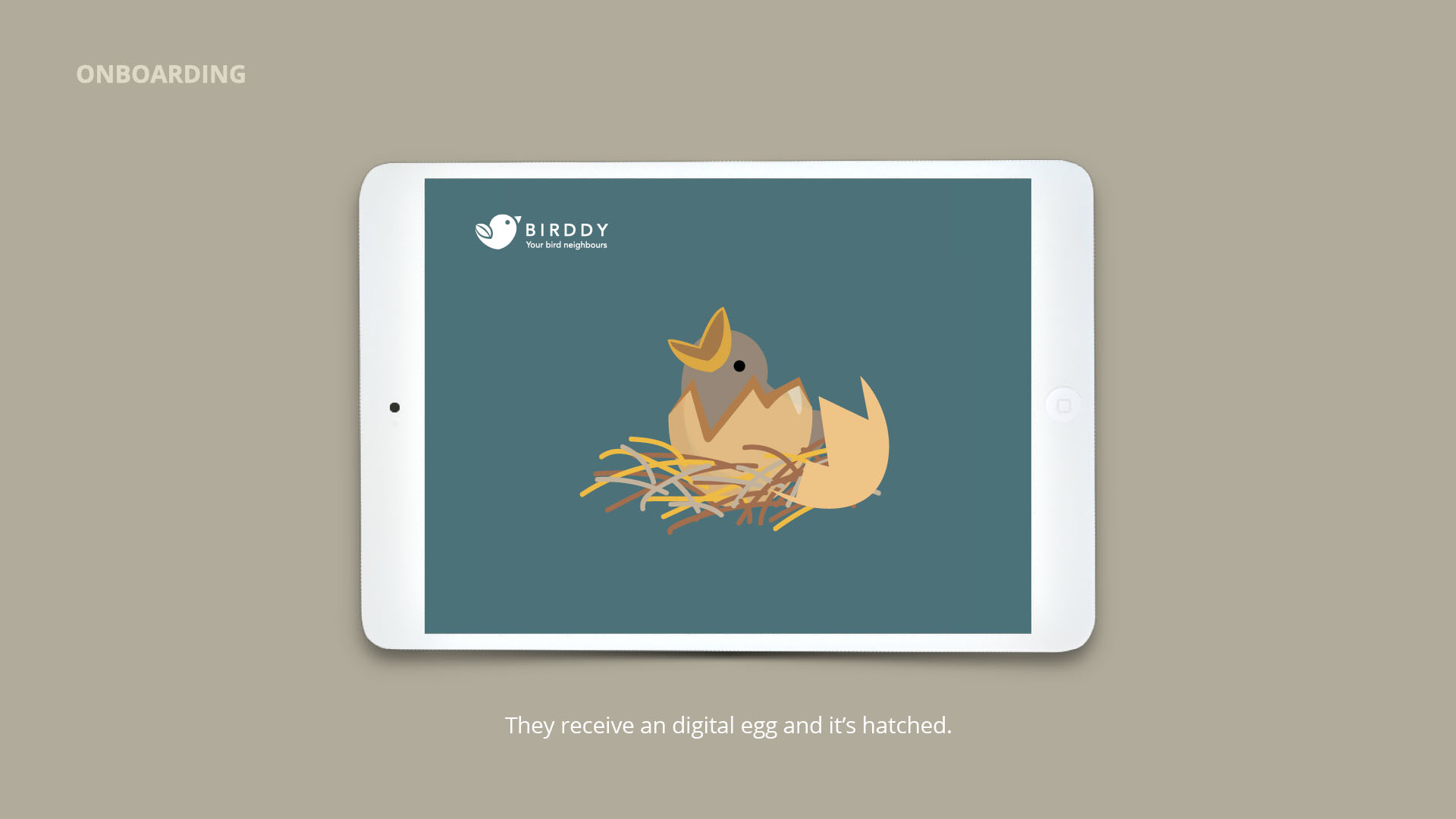
The parents think I need to reconsider the language of the survey as children can only understand simple and direct instructions. They appreciate the hatching egg received after the survey, they did look forward to the bird on the next email. Children generally get excited for the AR and app features. They also love drawing their walking journey. Parents are more cautious about the idea of digital applications, for them it seems contradictory to outdoor experiences. The mapping exercise is too technical that none of them could finish. I also discovered that children are not capable of expressing their feelings thoroughly.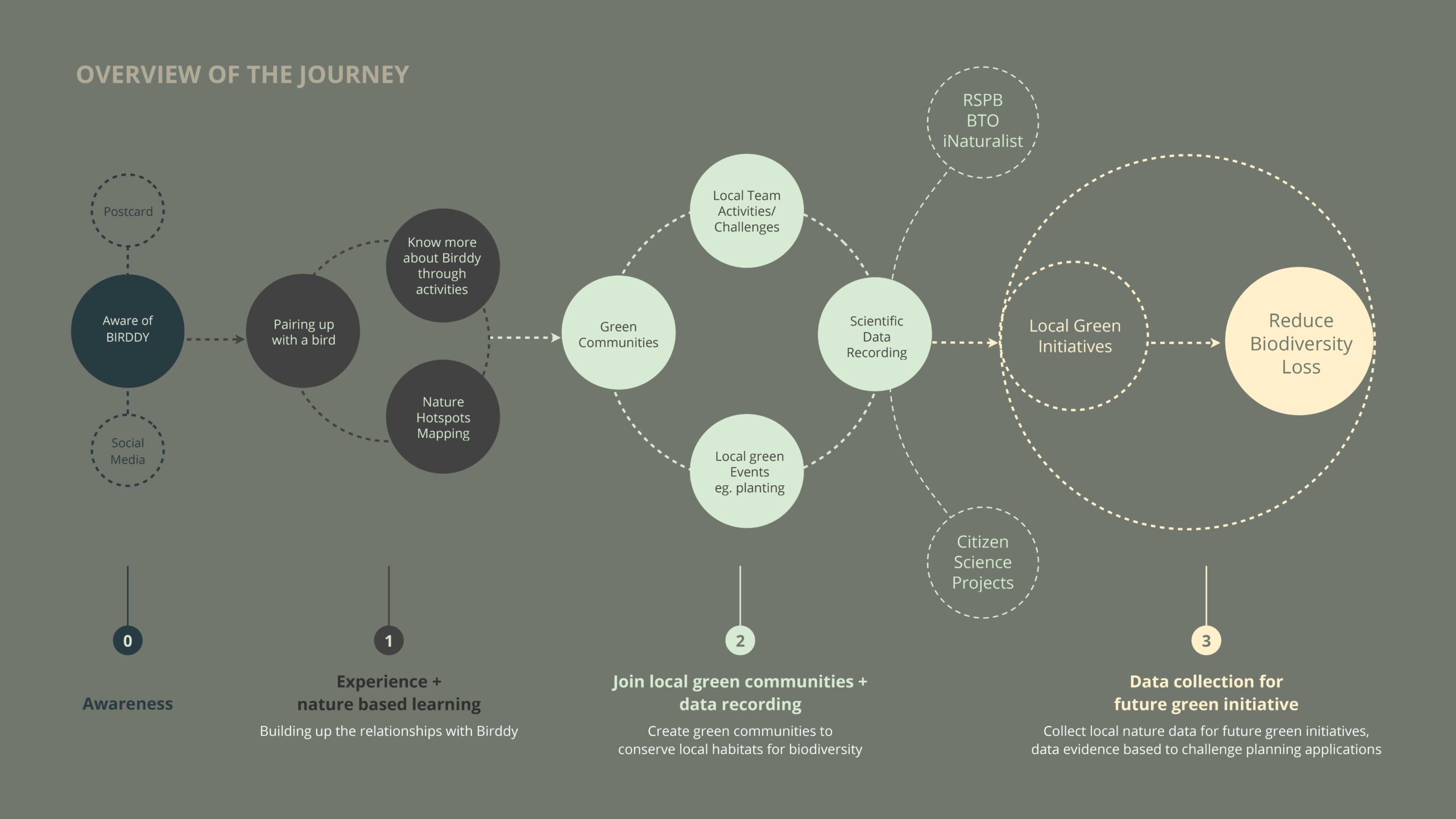
The service
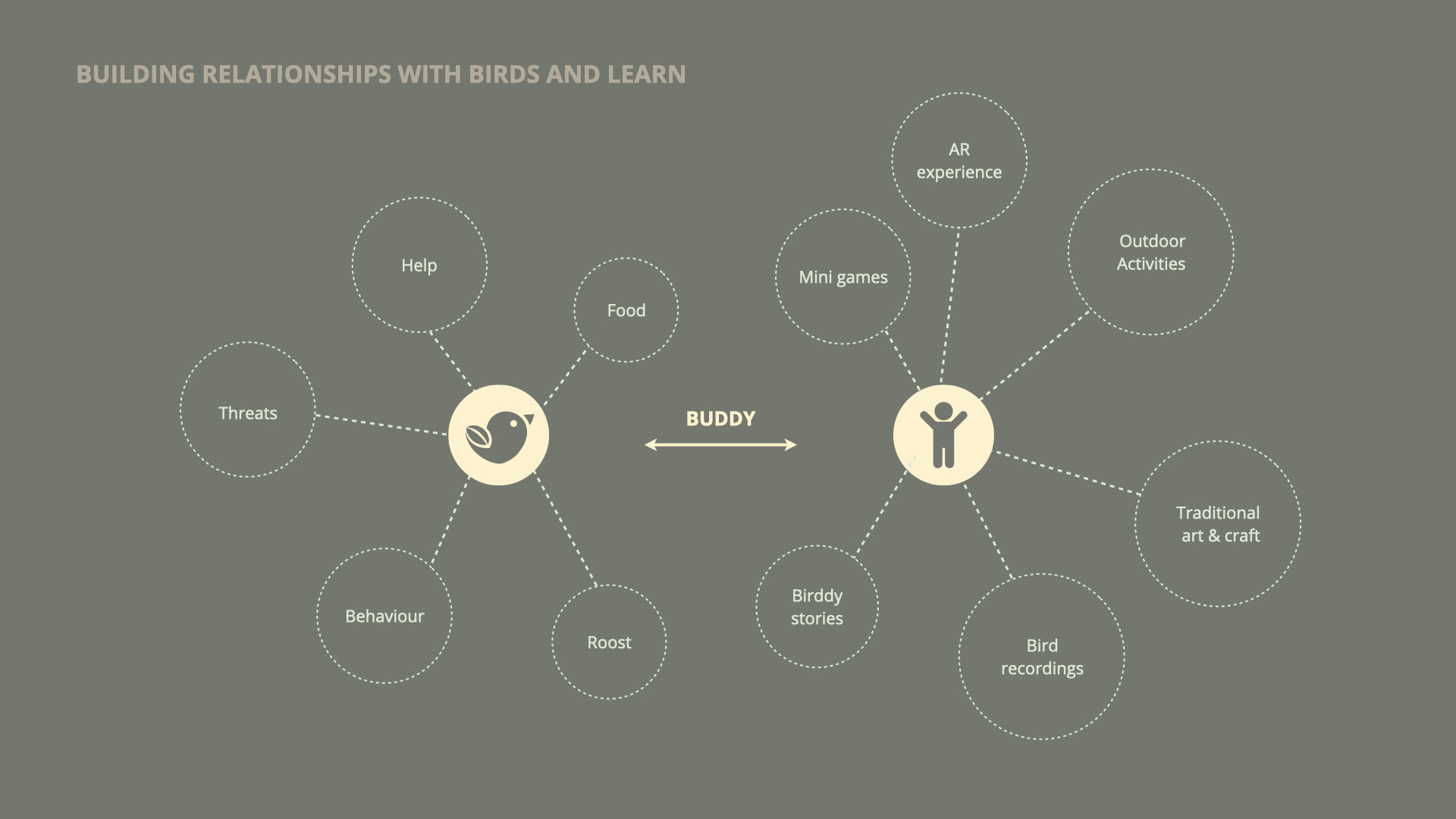
Building up companionships with Birddies and appreciate nature in the neighbourhood.
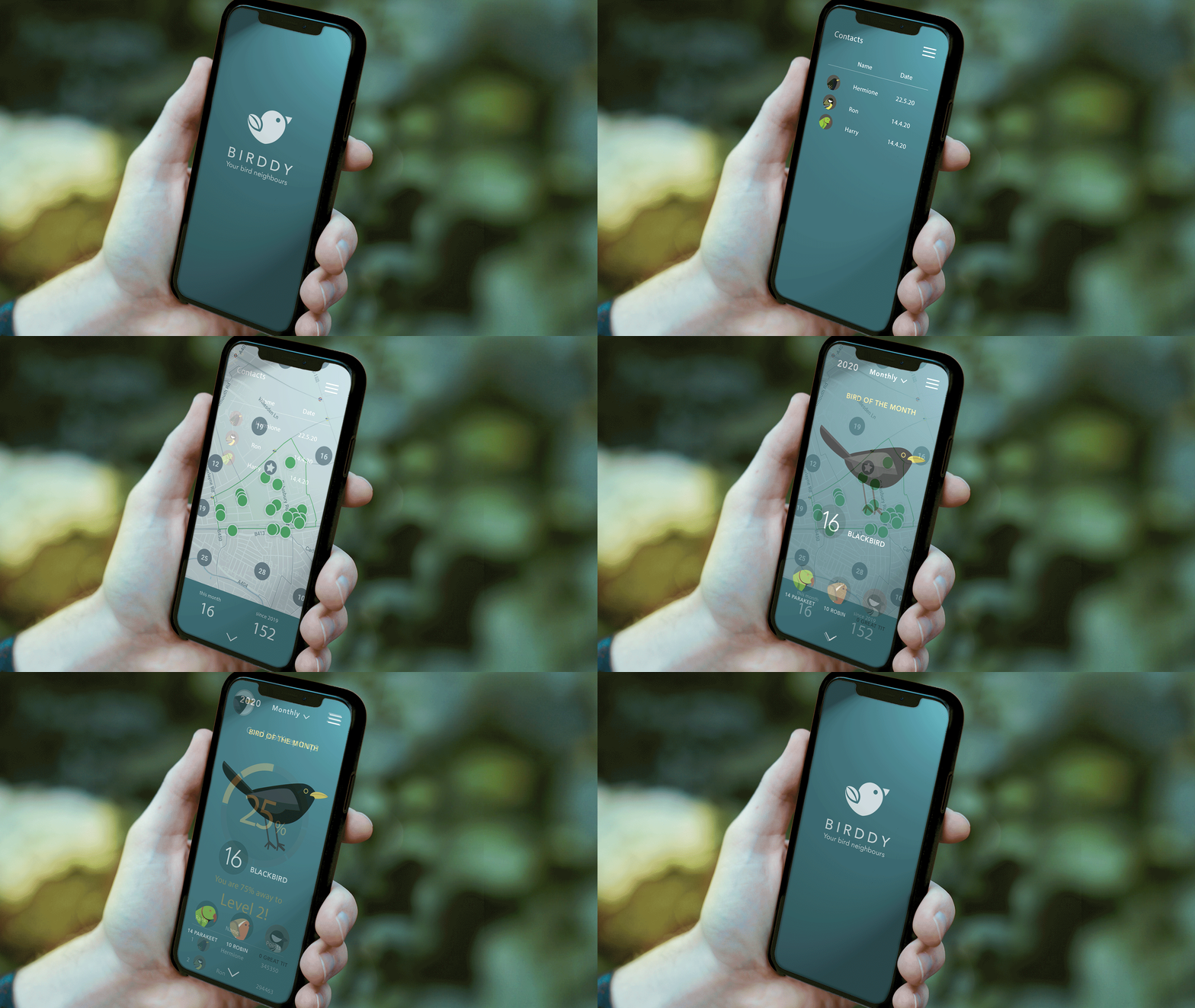
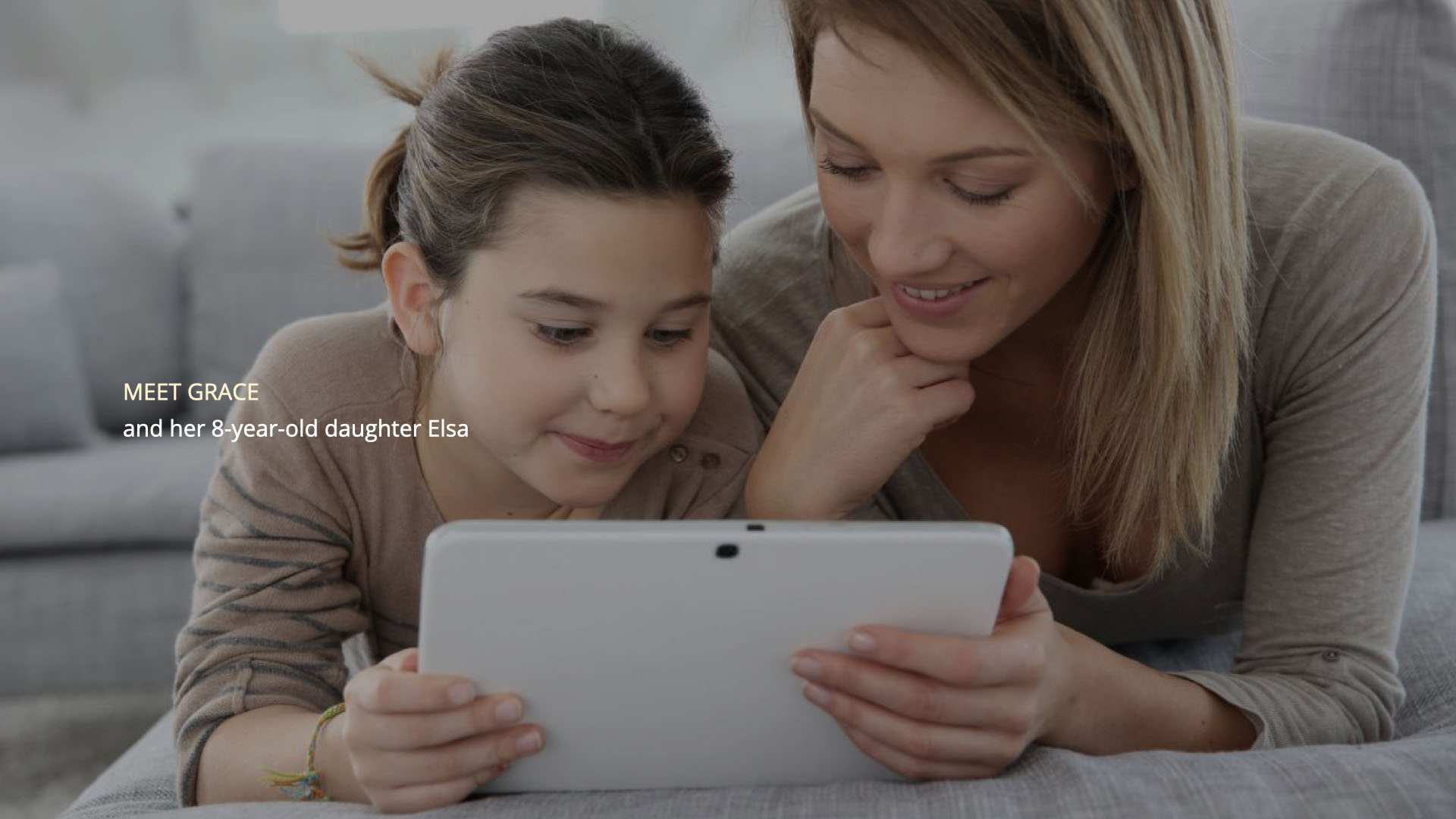
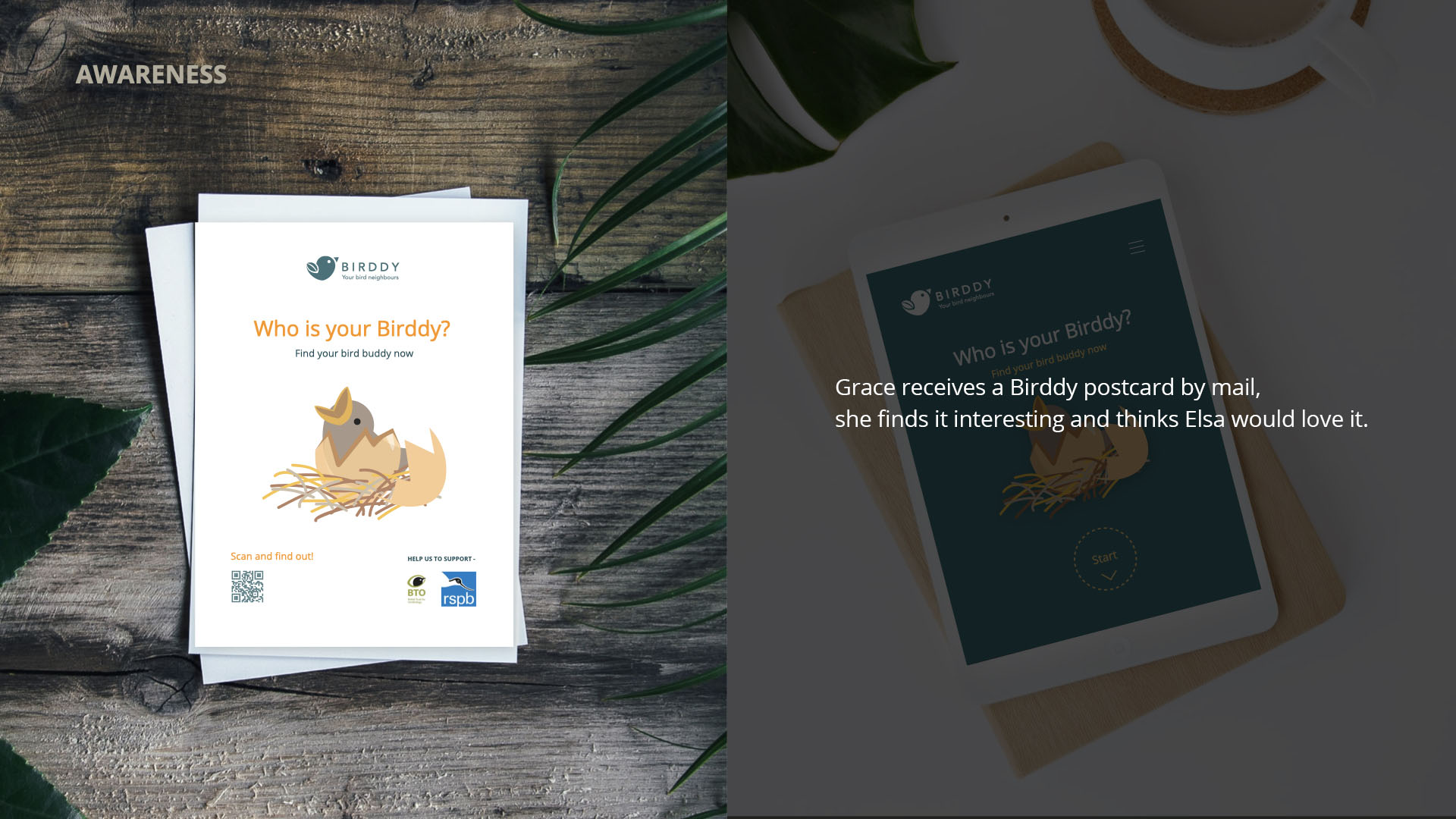
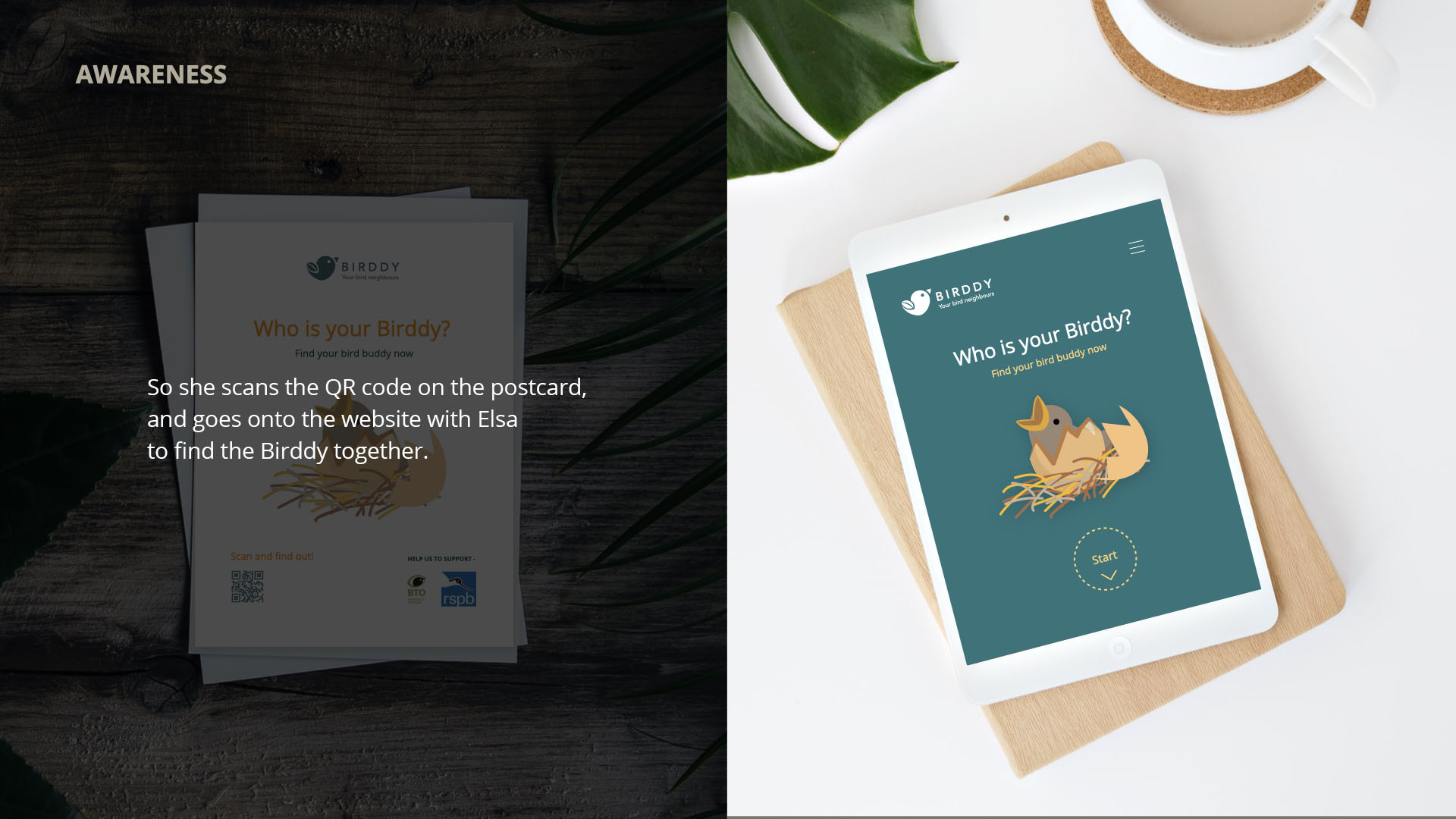
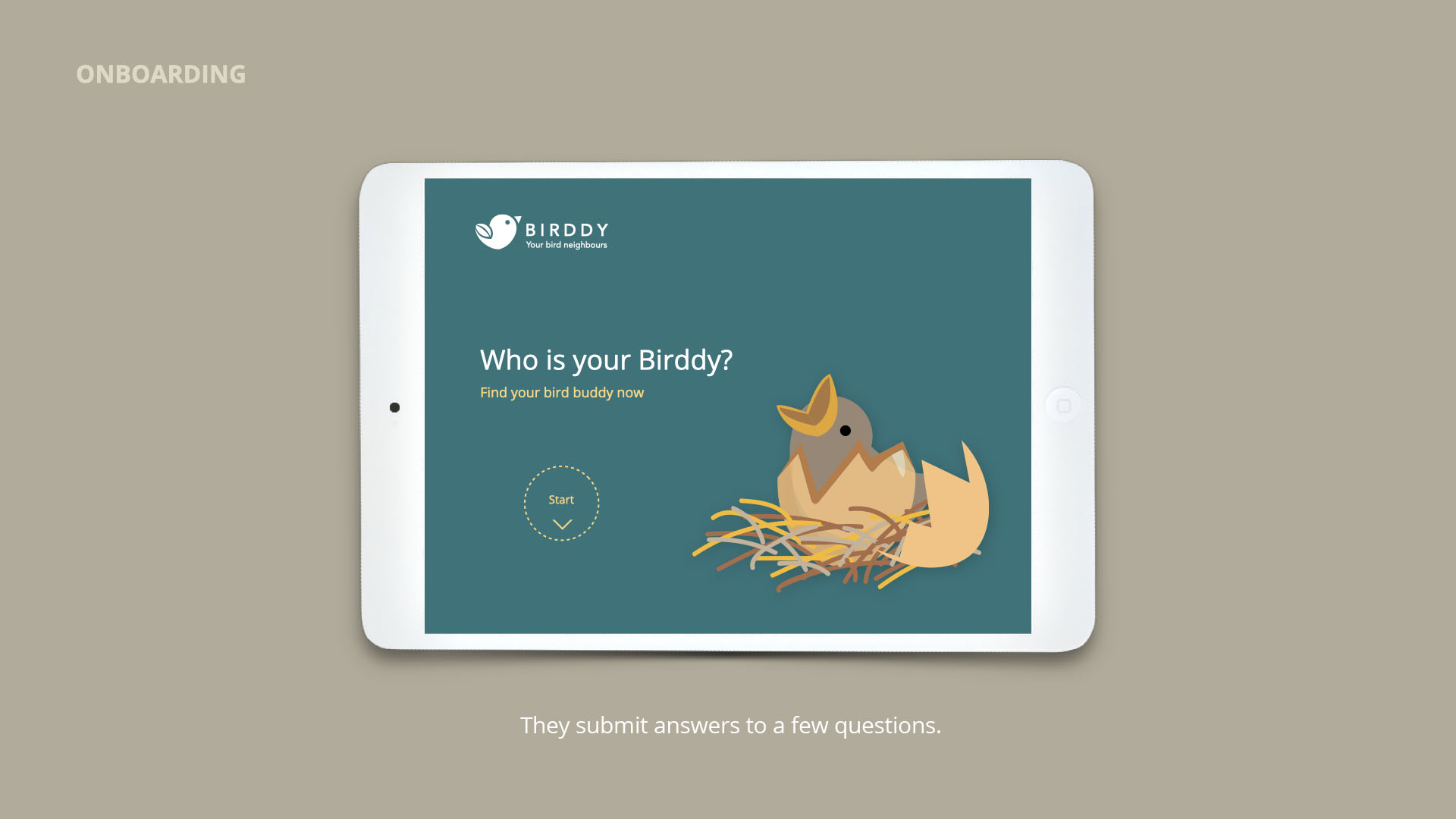
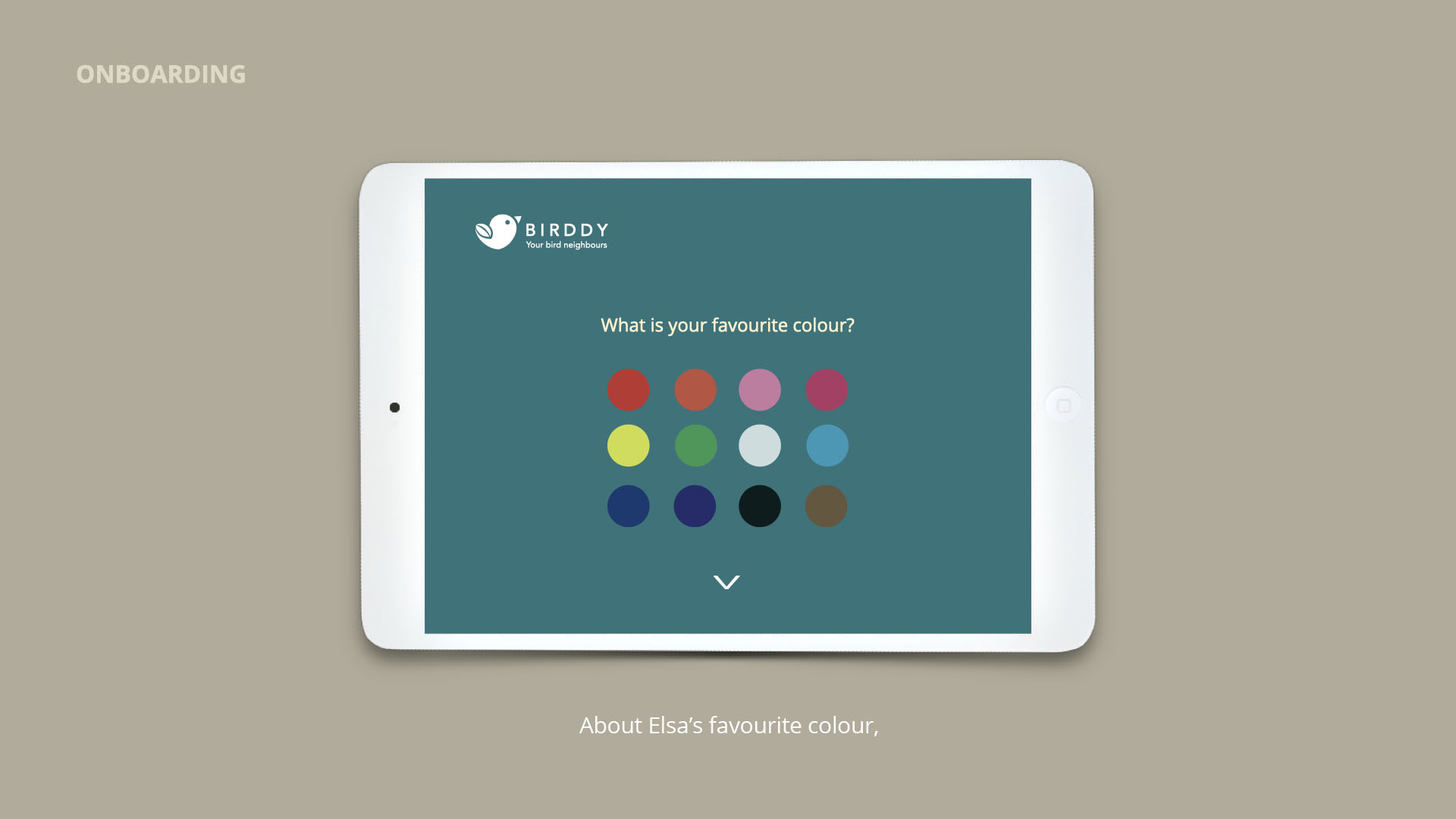
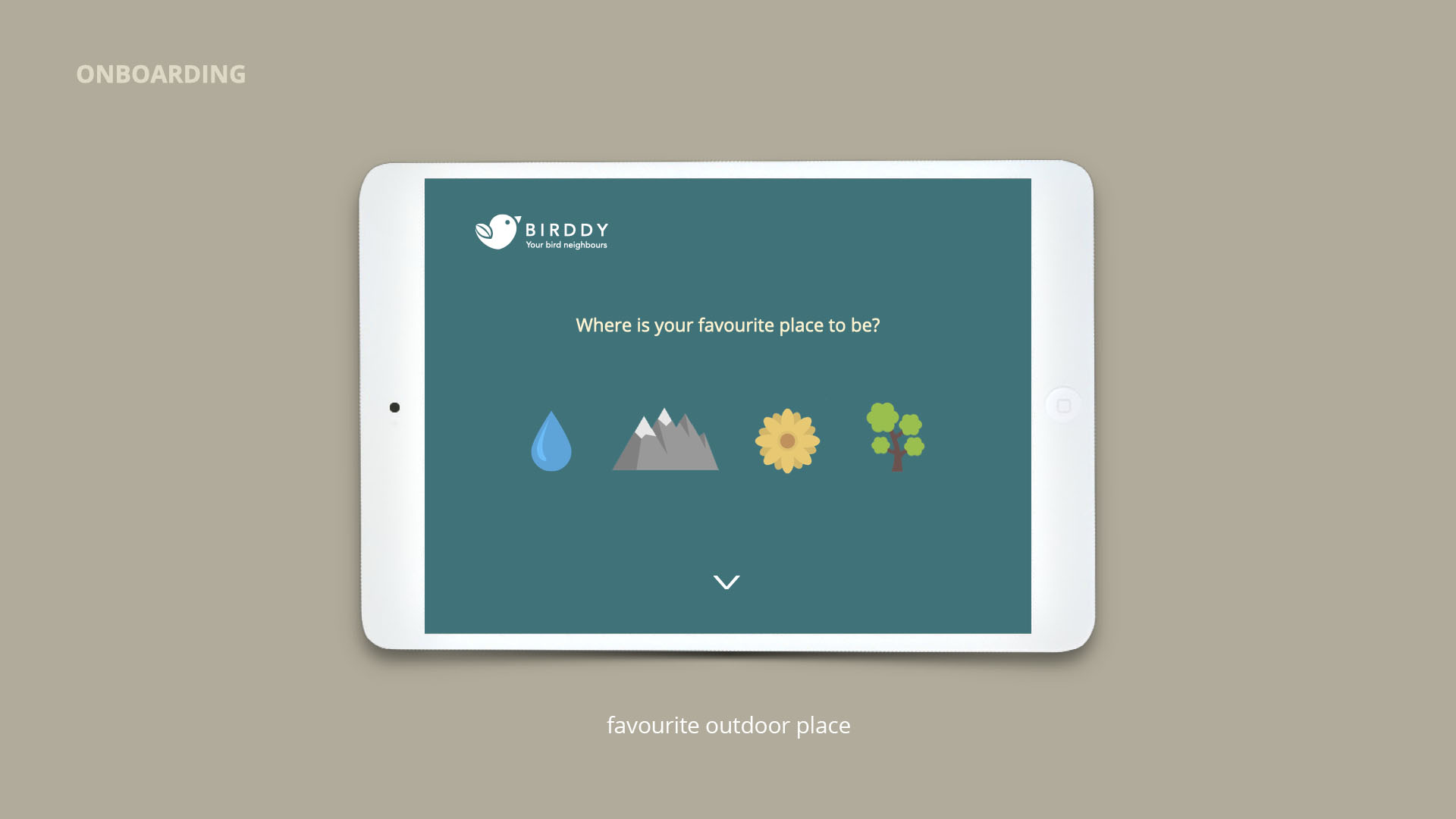
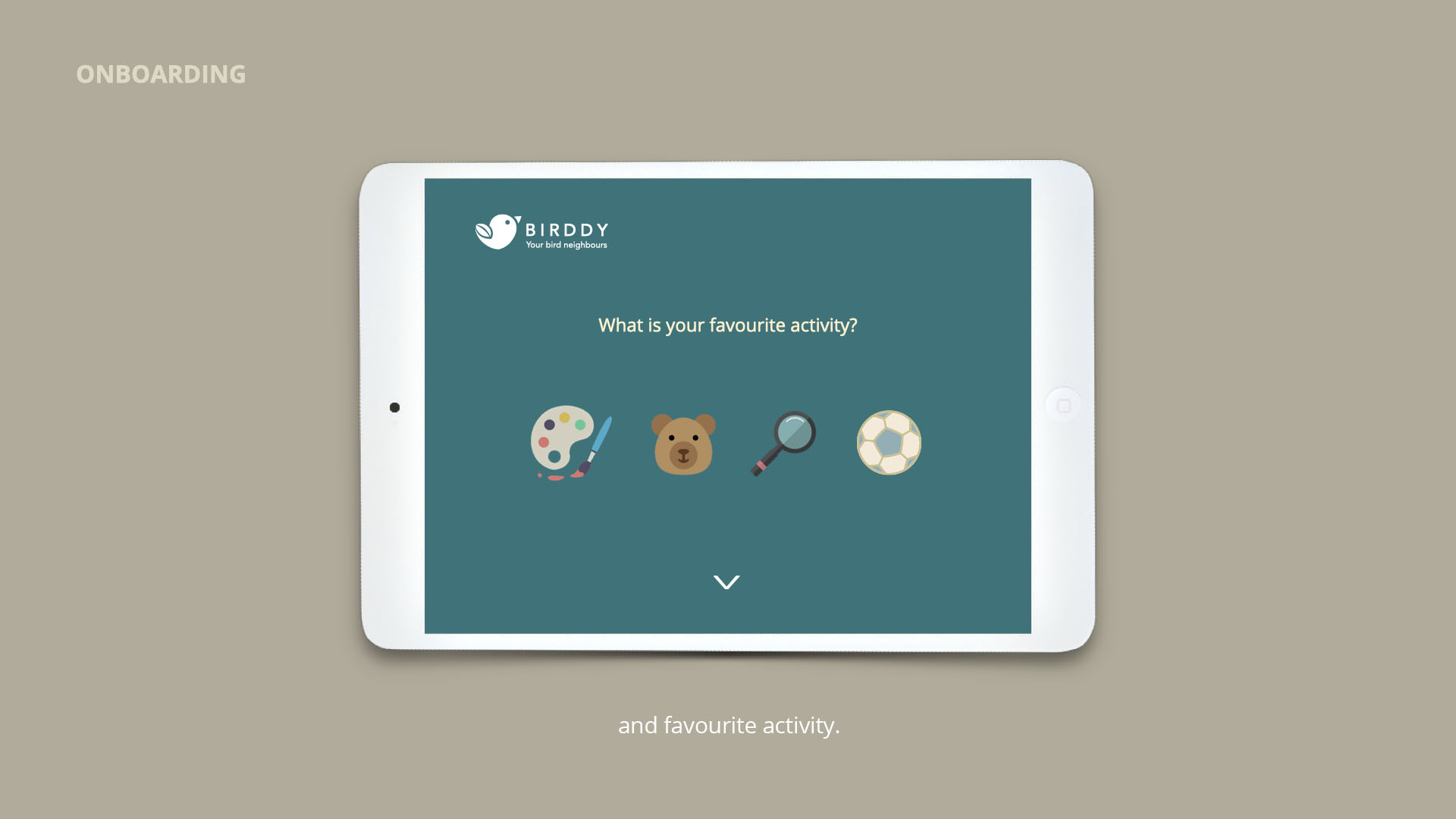
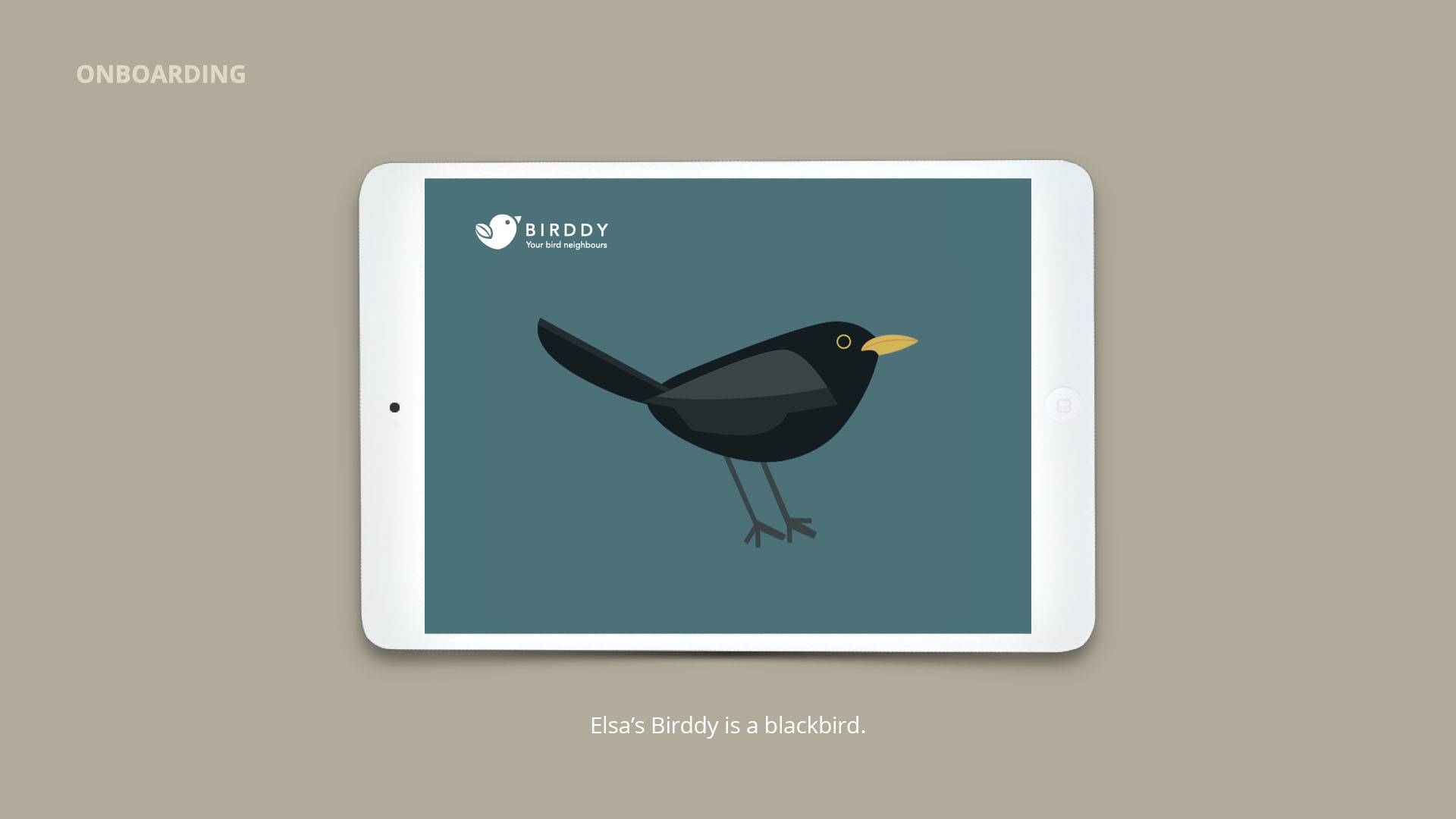
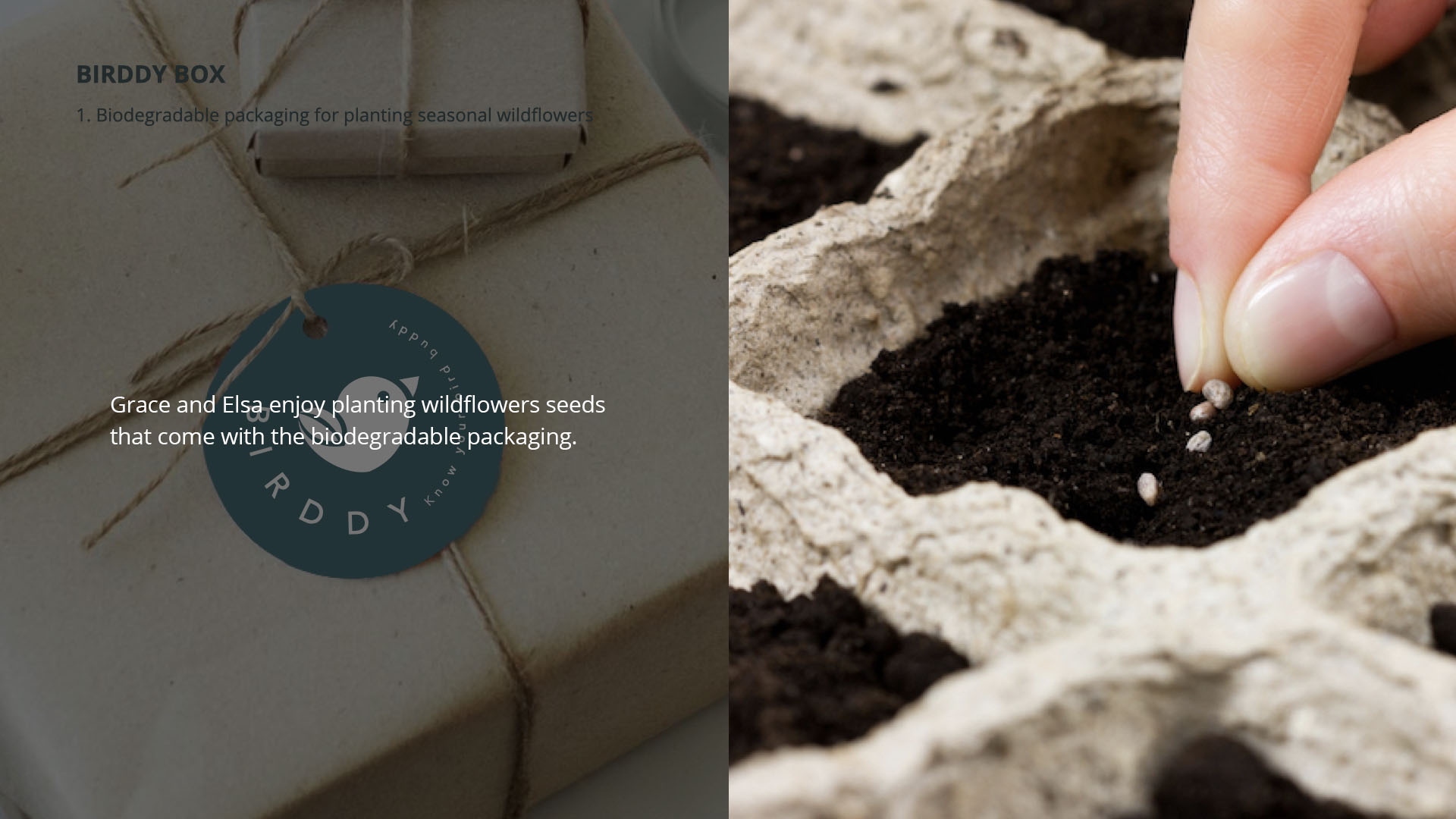
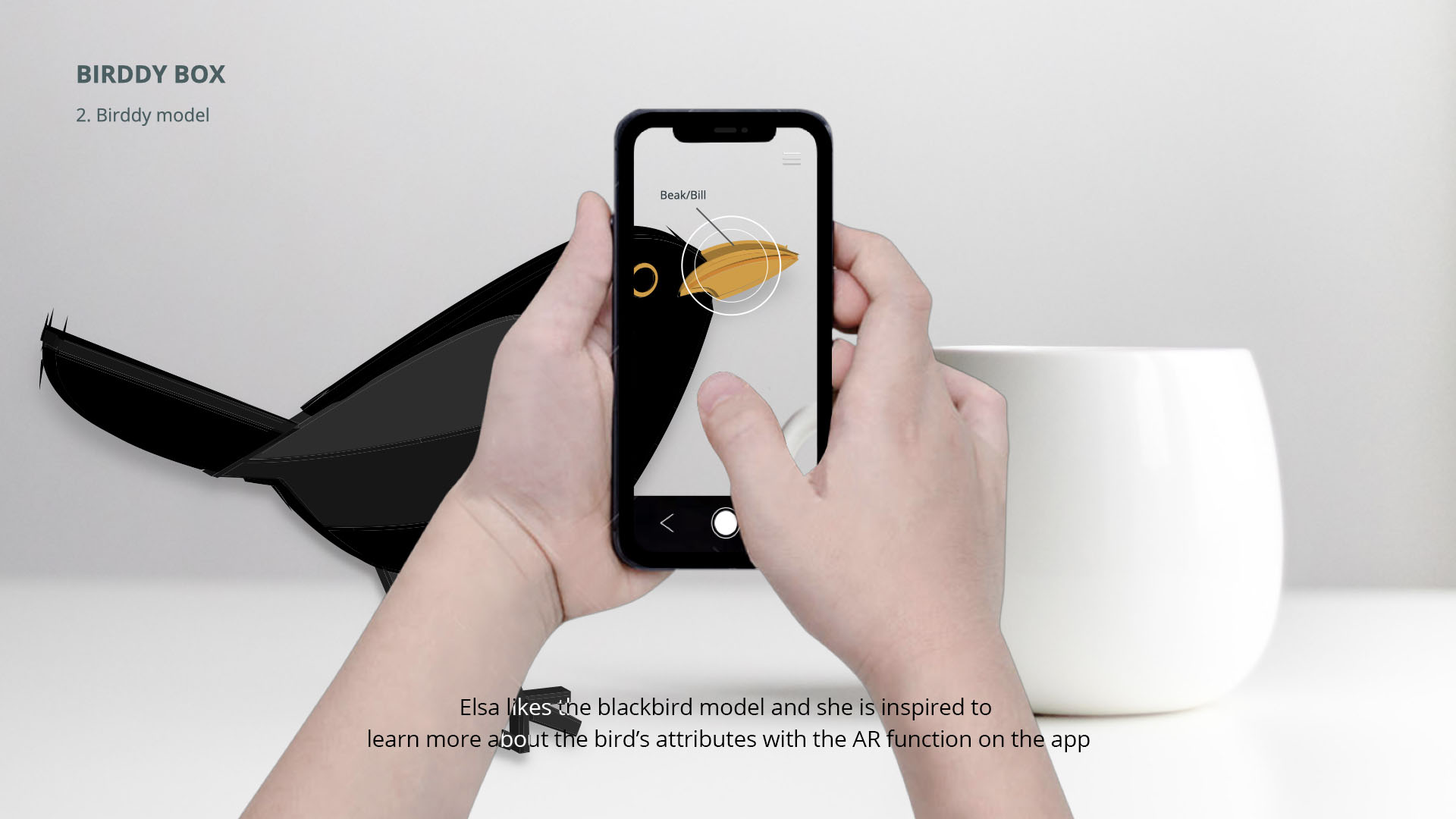
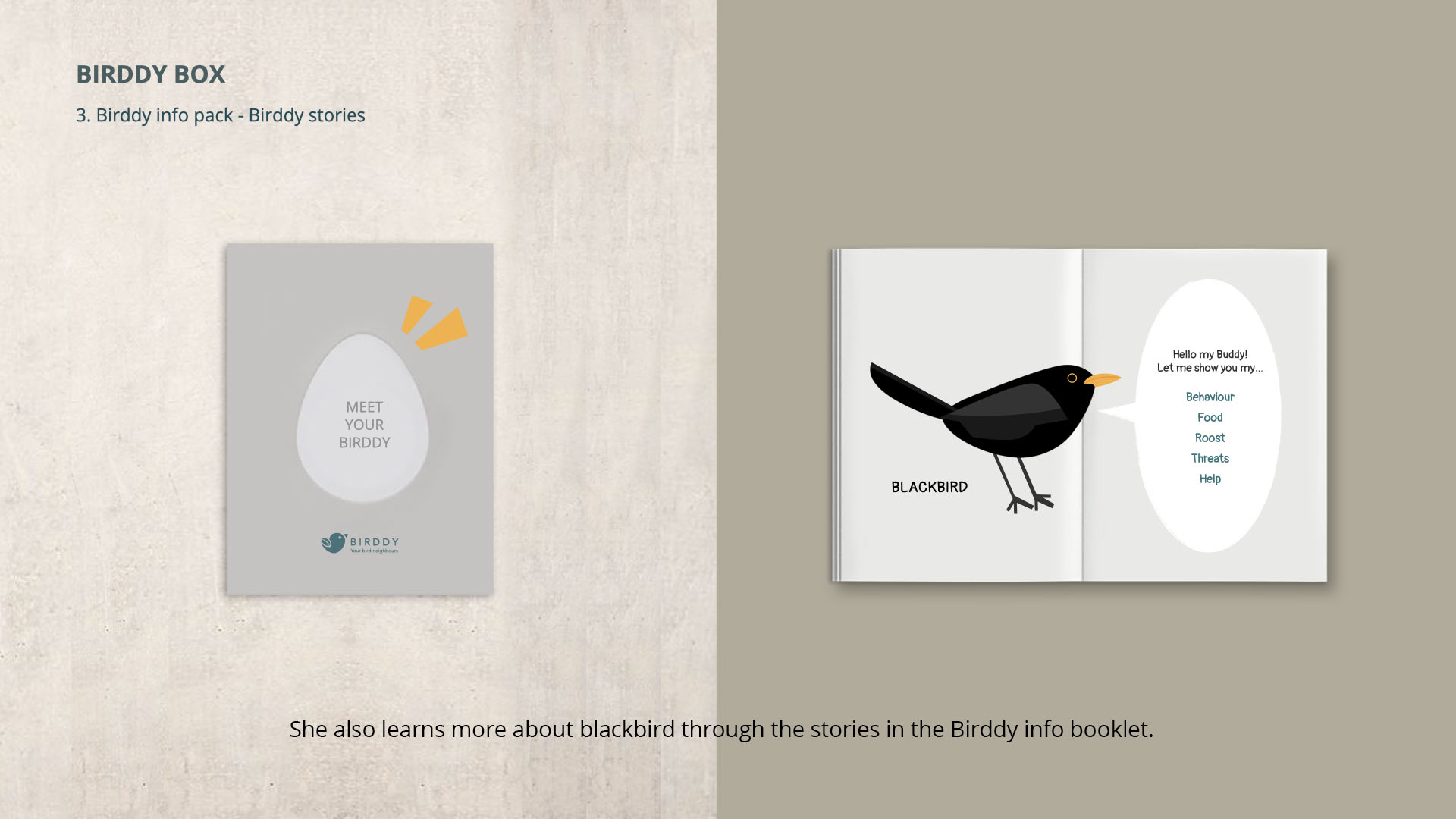
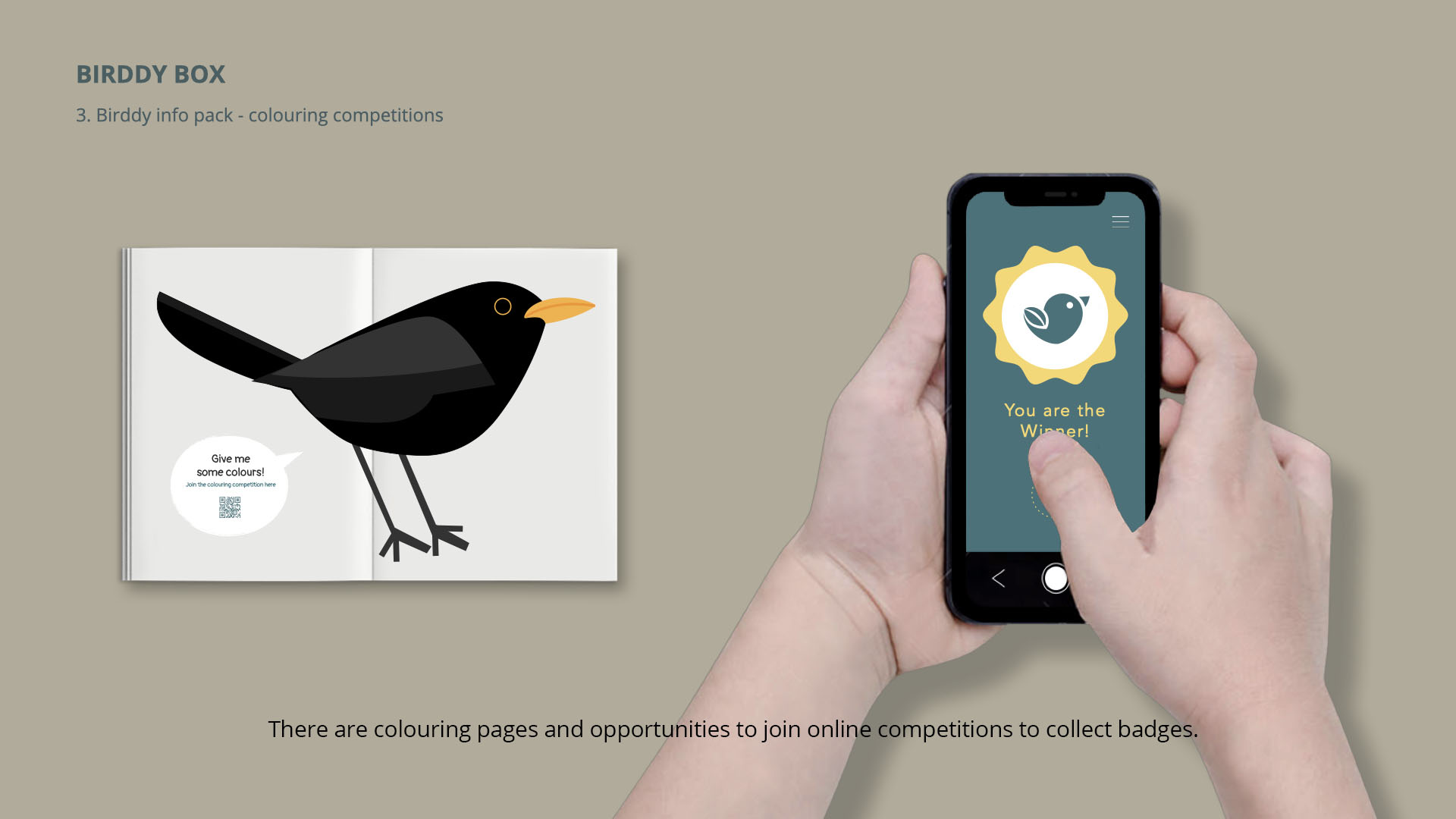
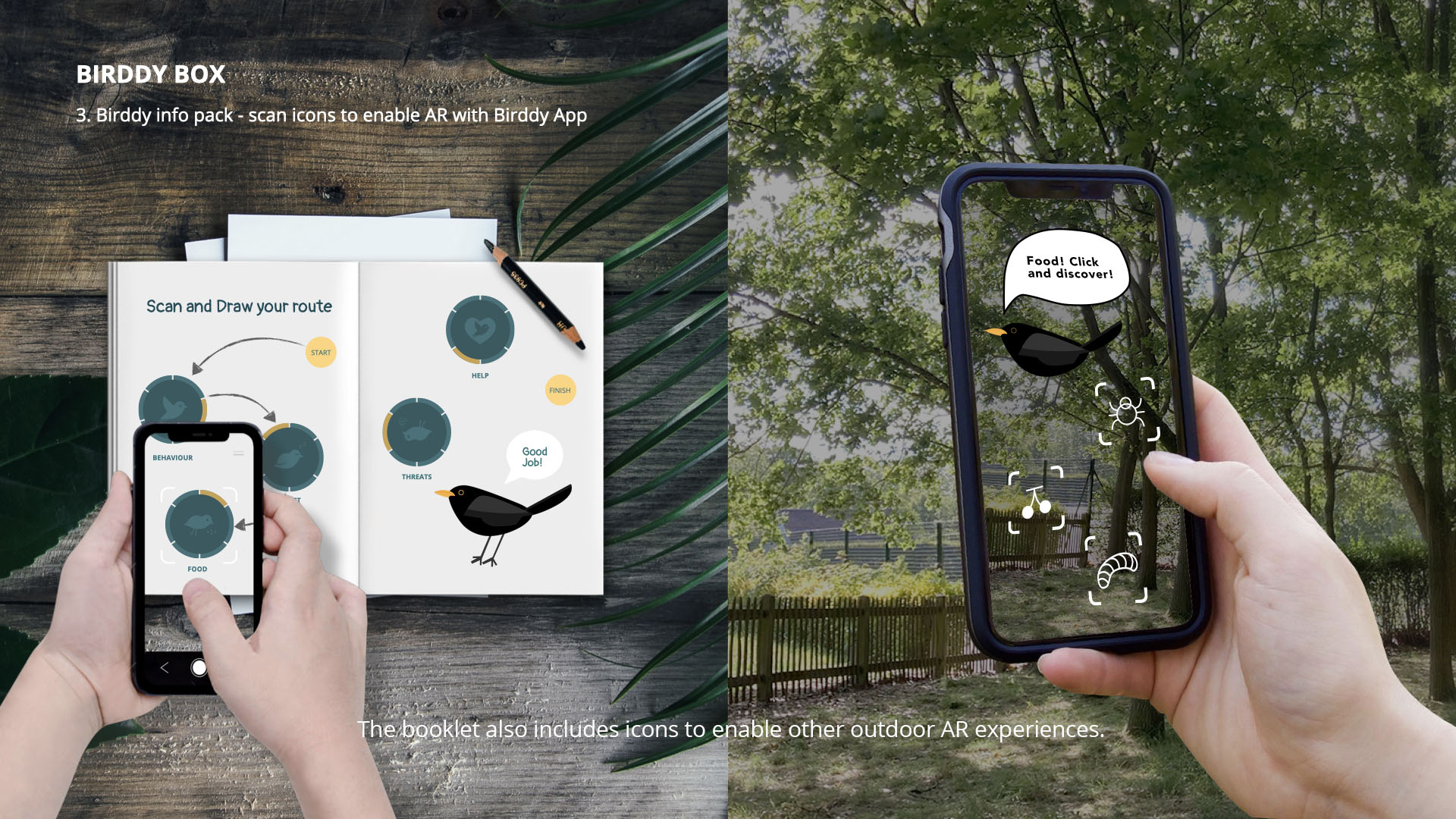
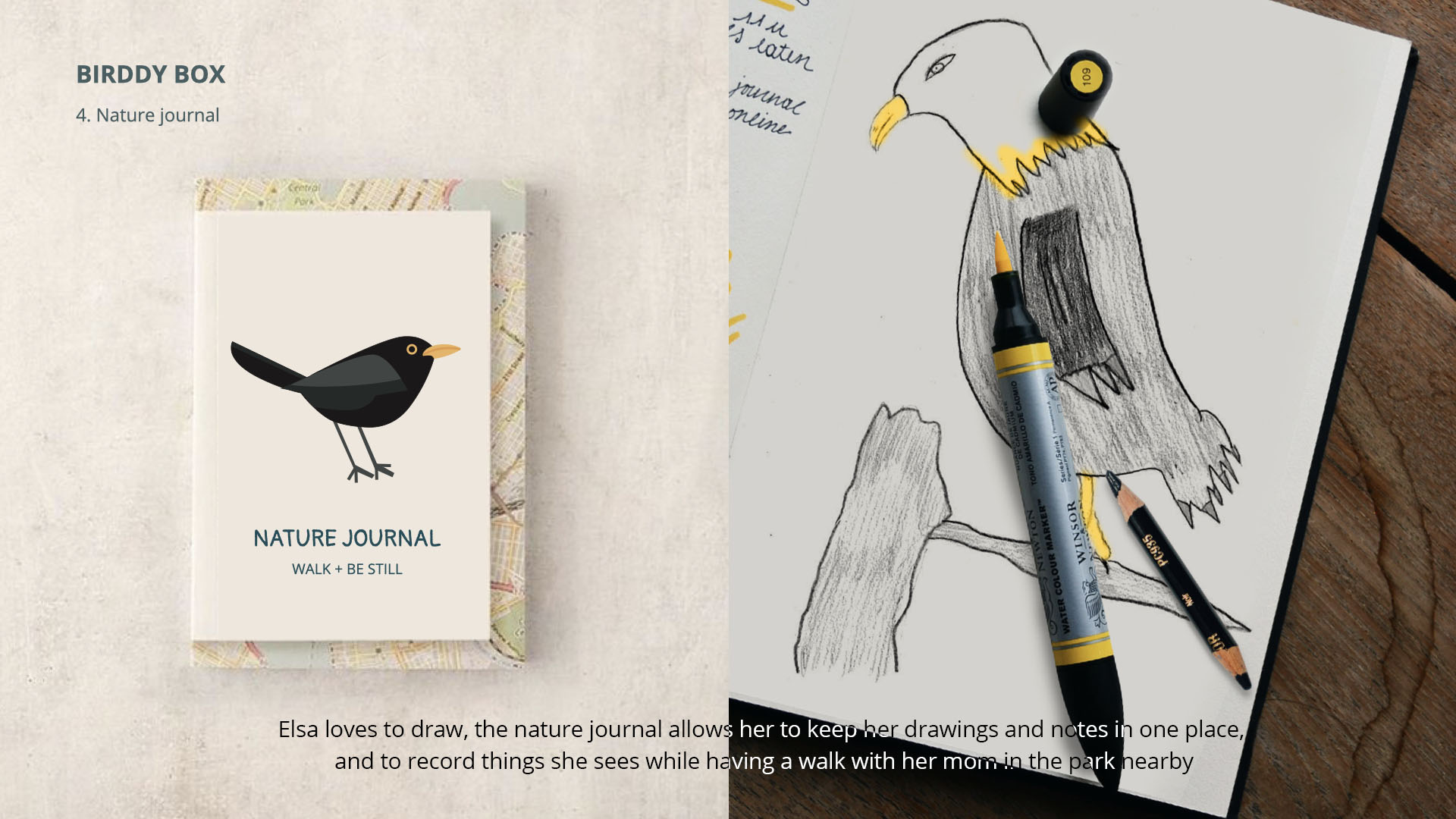
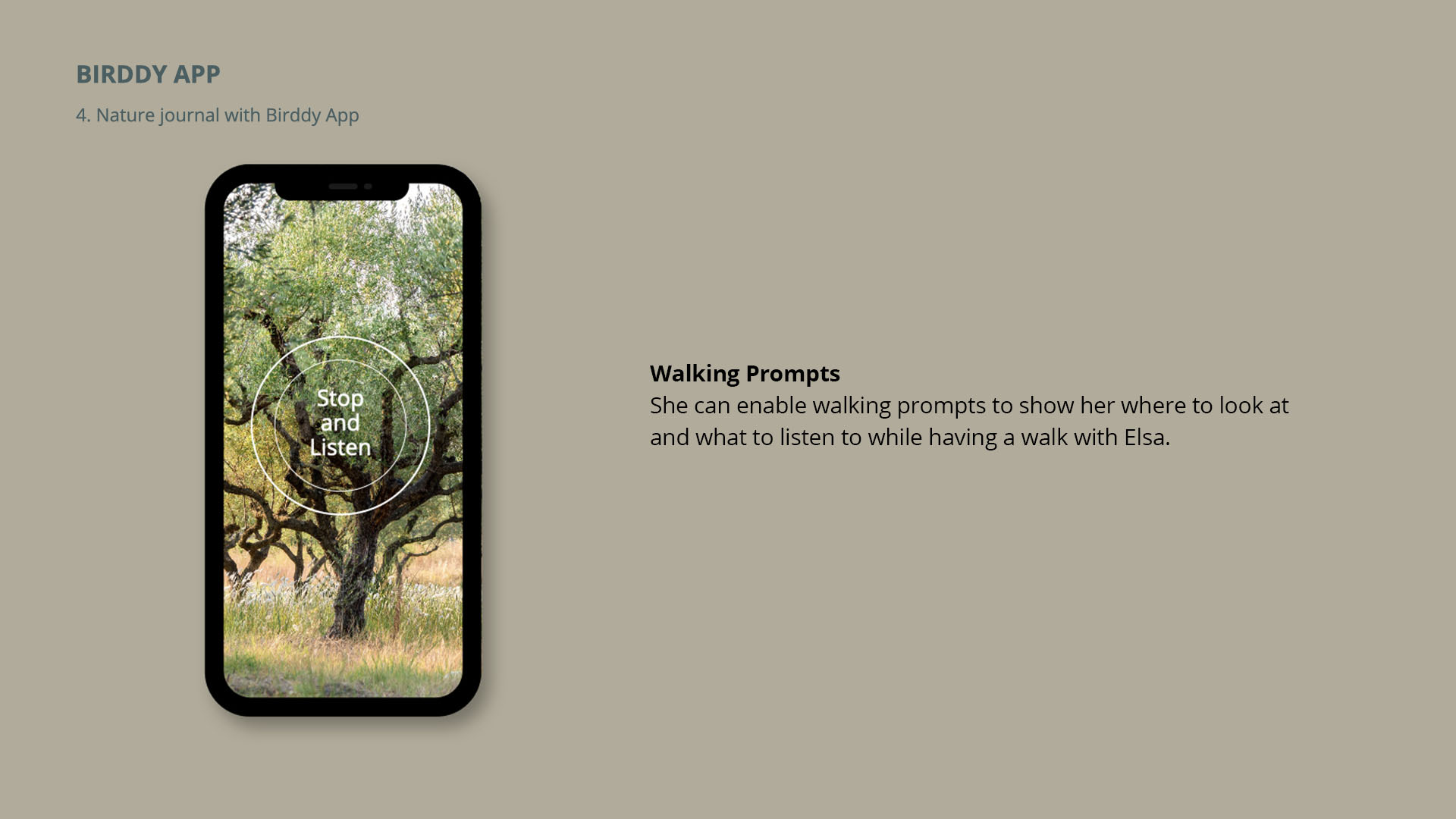
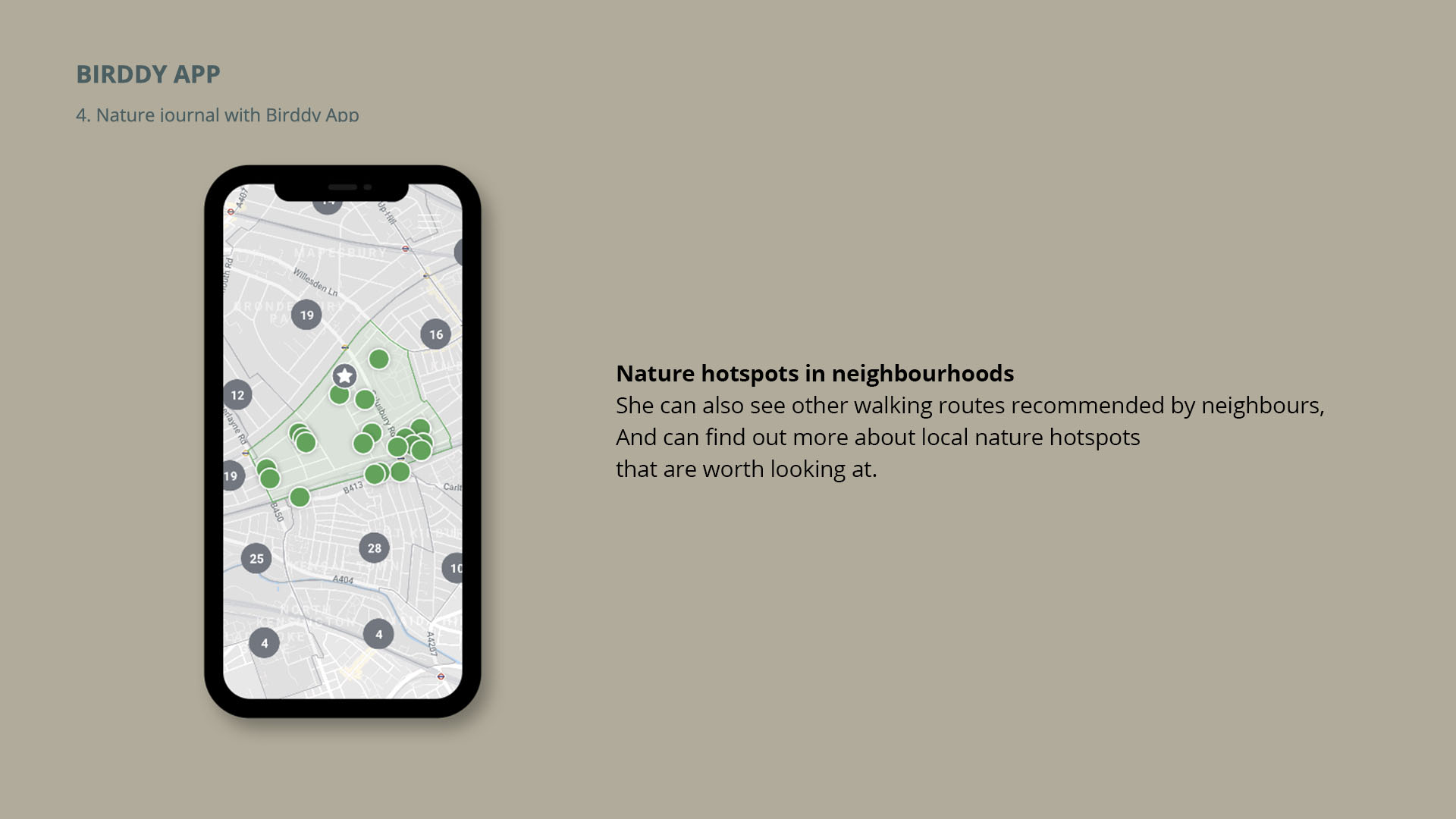
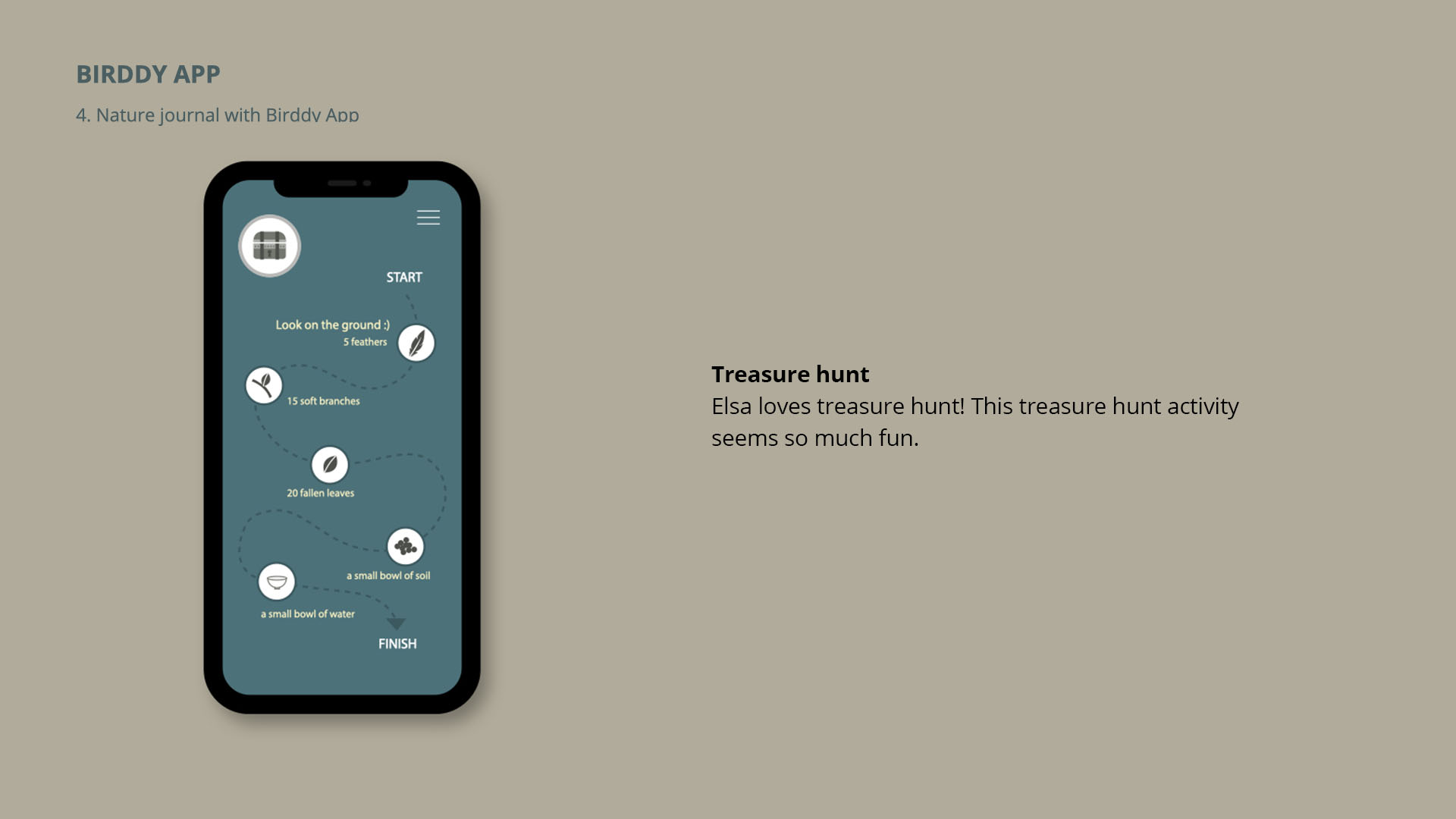
Birddy is a subscription based service for children and families. It encourages people to appreciate nature locally through bird and nature related activities. Part of Birddy’s profit will be donated to bird conservation charities to support their work. Let’s meet Grace and her 8 year old daughter Elsa to guide you through finer details of the service.

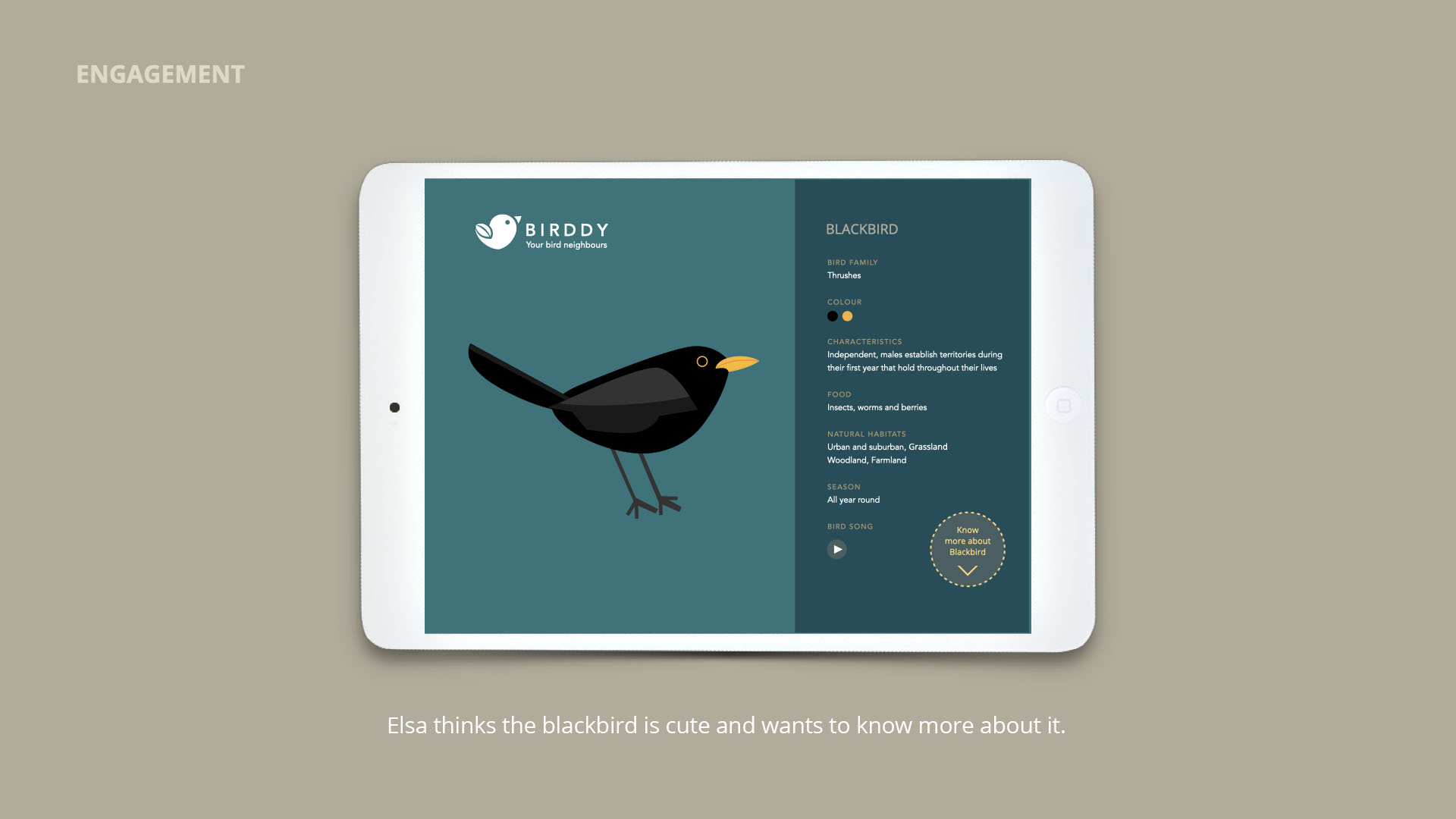
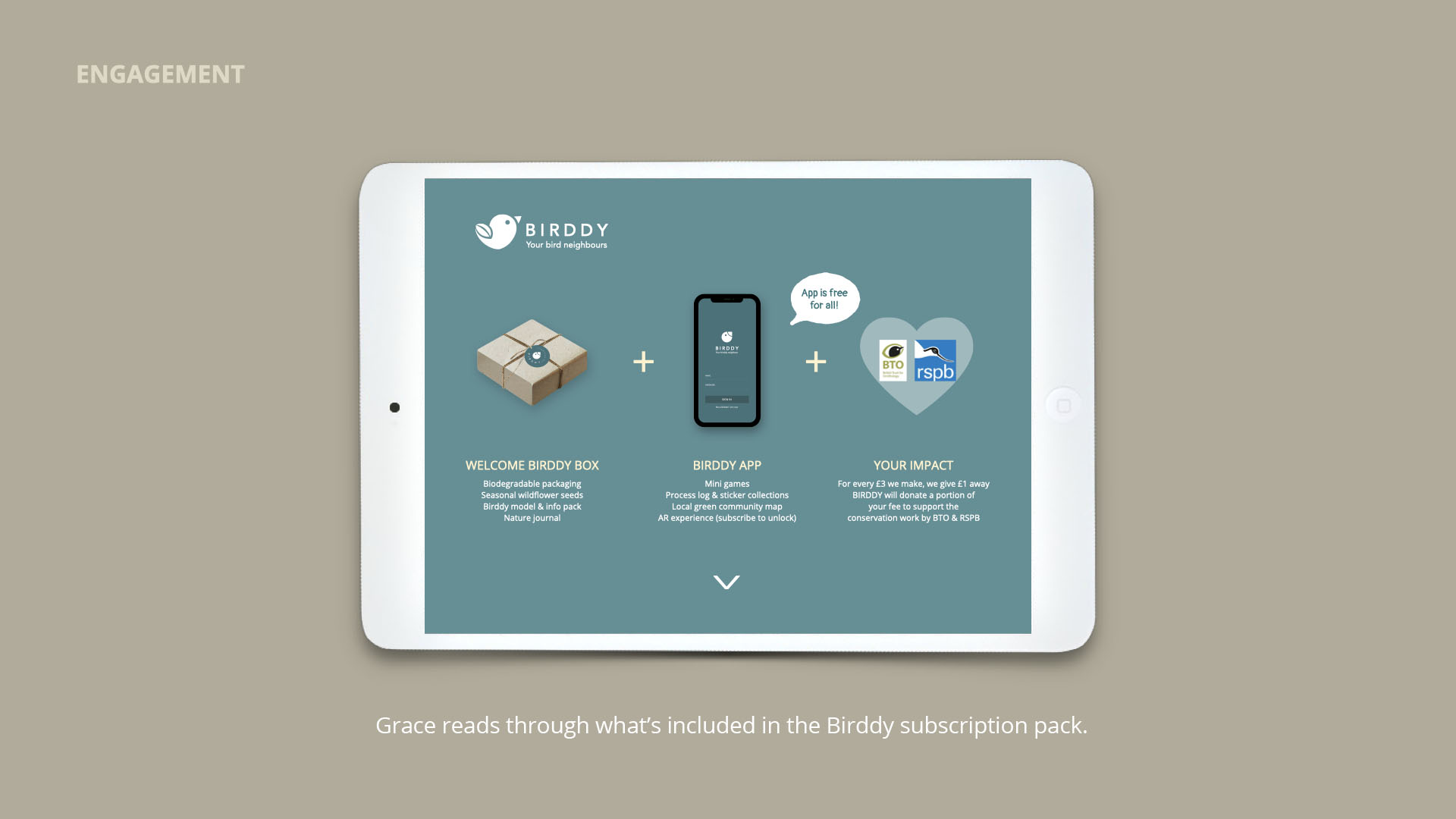
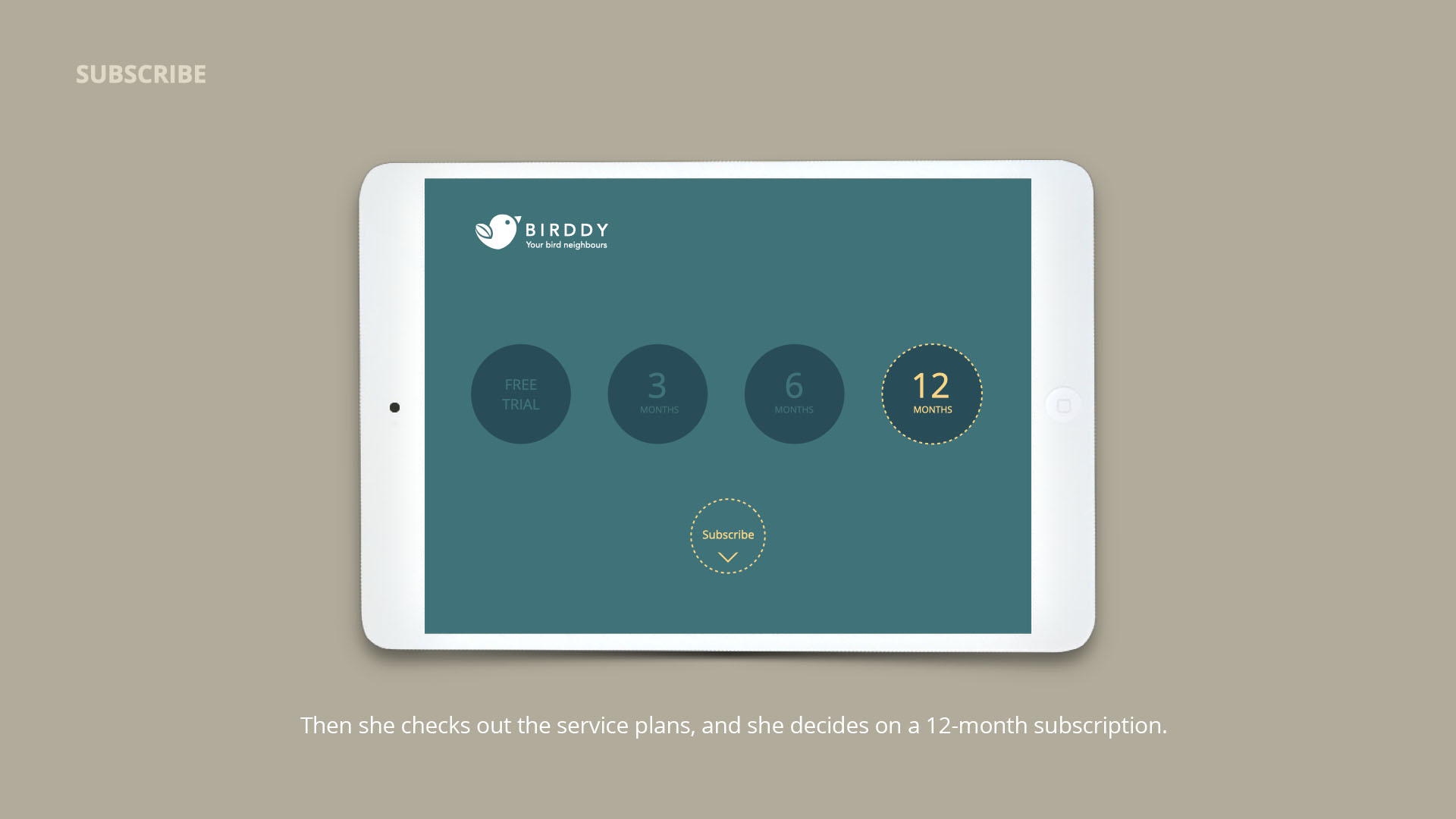
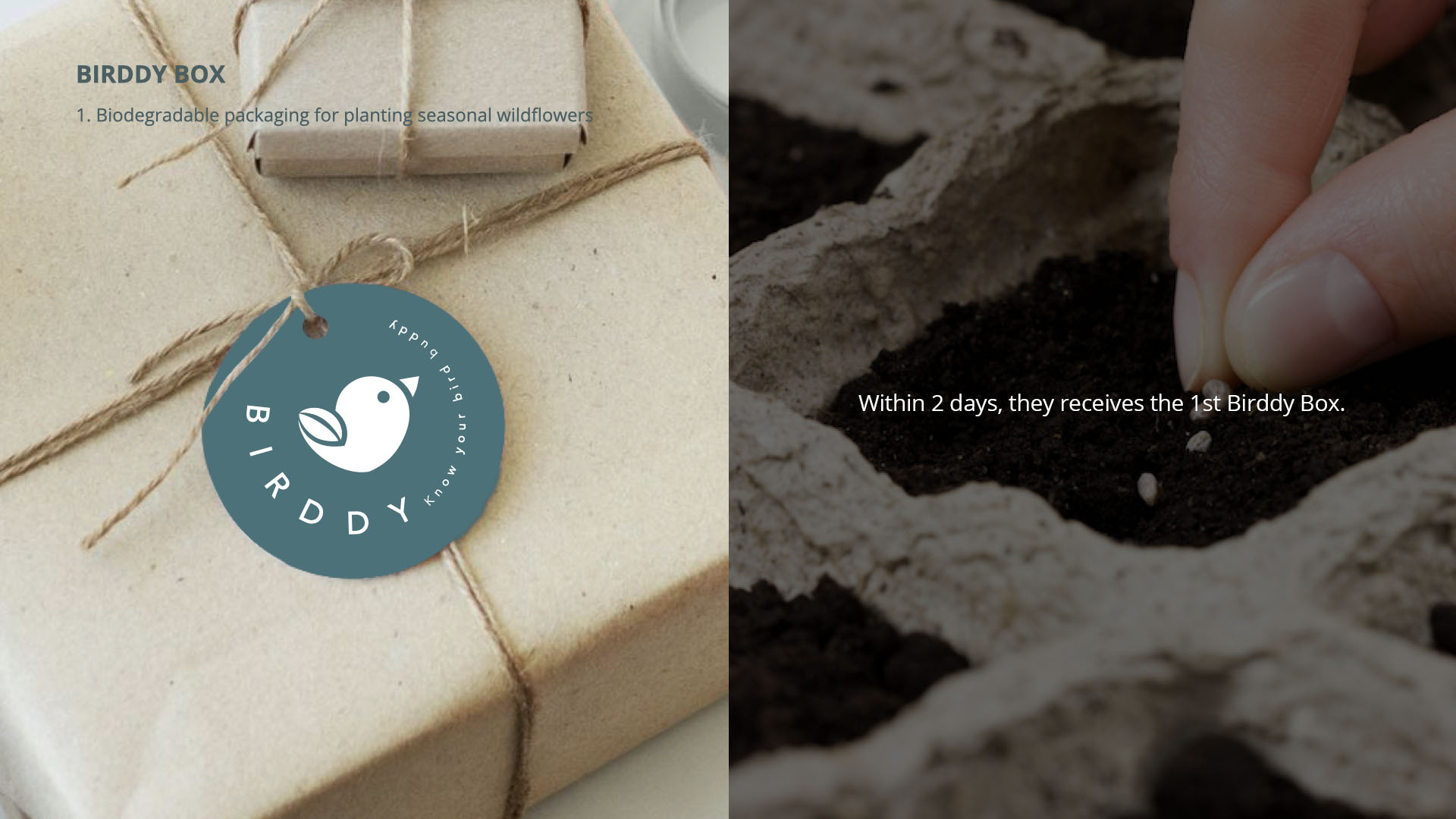
The impact
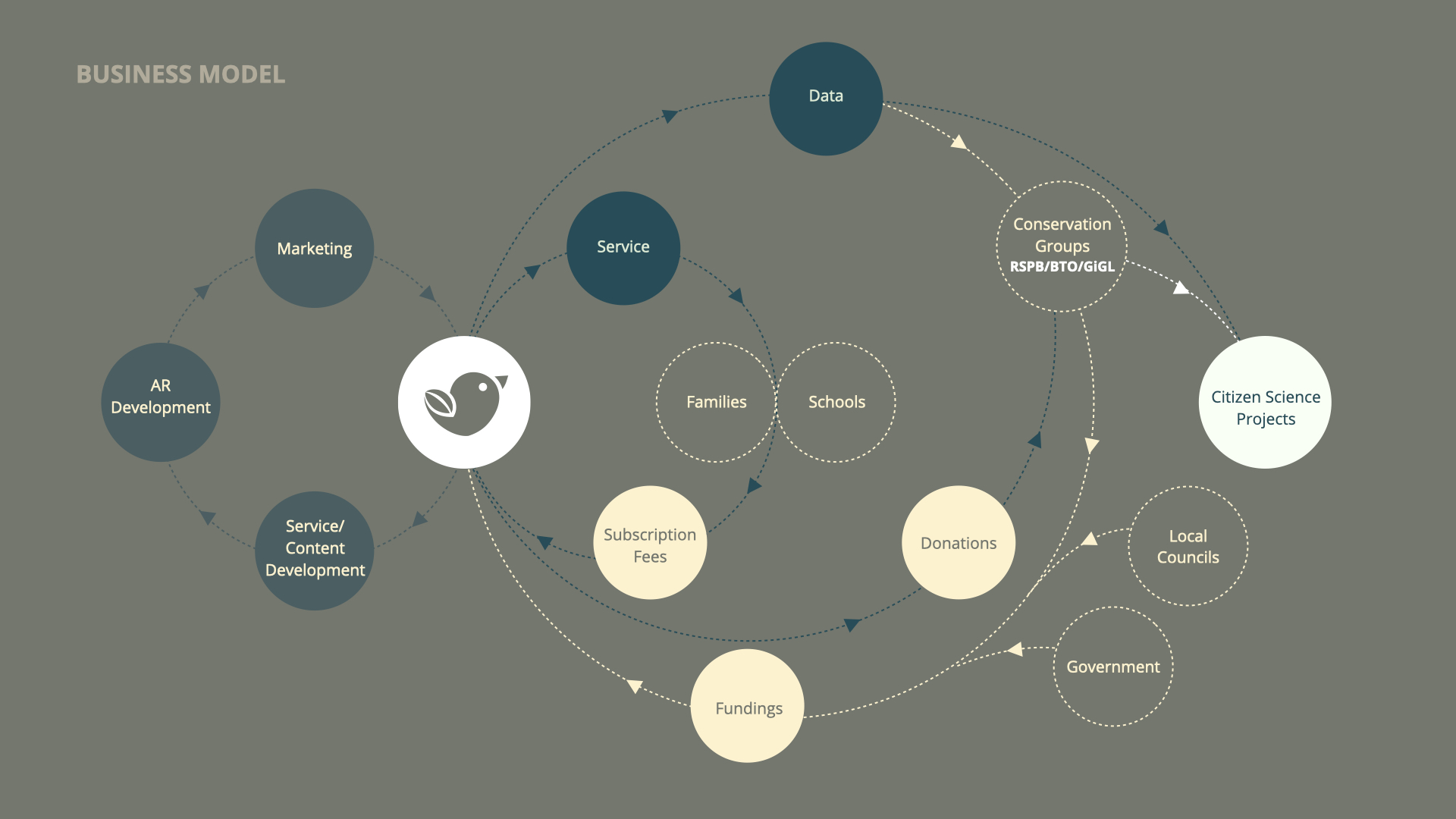
By the theory of change, Birddy wants to achieve the goal of reducing biodiversity loss in neighbourhoods, the below diagrams show how the changes happen in the short, medium and long term. Stakeholders would benefit from the services by Birddy in different scales from individual to nationwide. Birddy would also donate part of the profit and transfer scientific data records to RSPB and BTO to support their ongoing conservation work.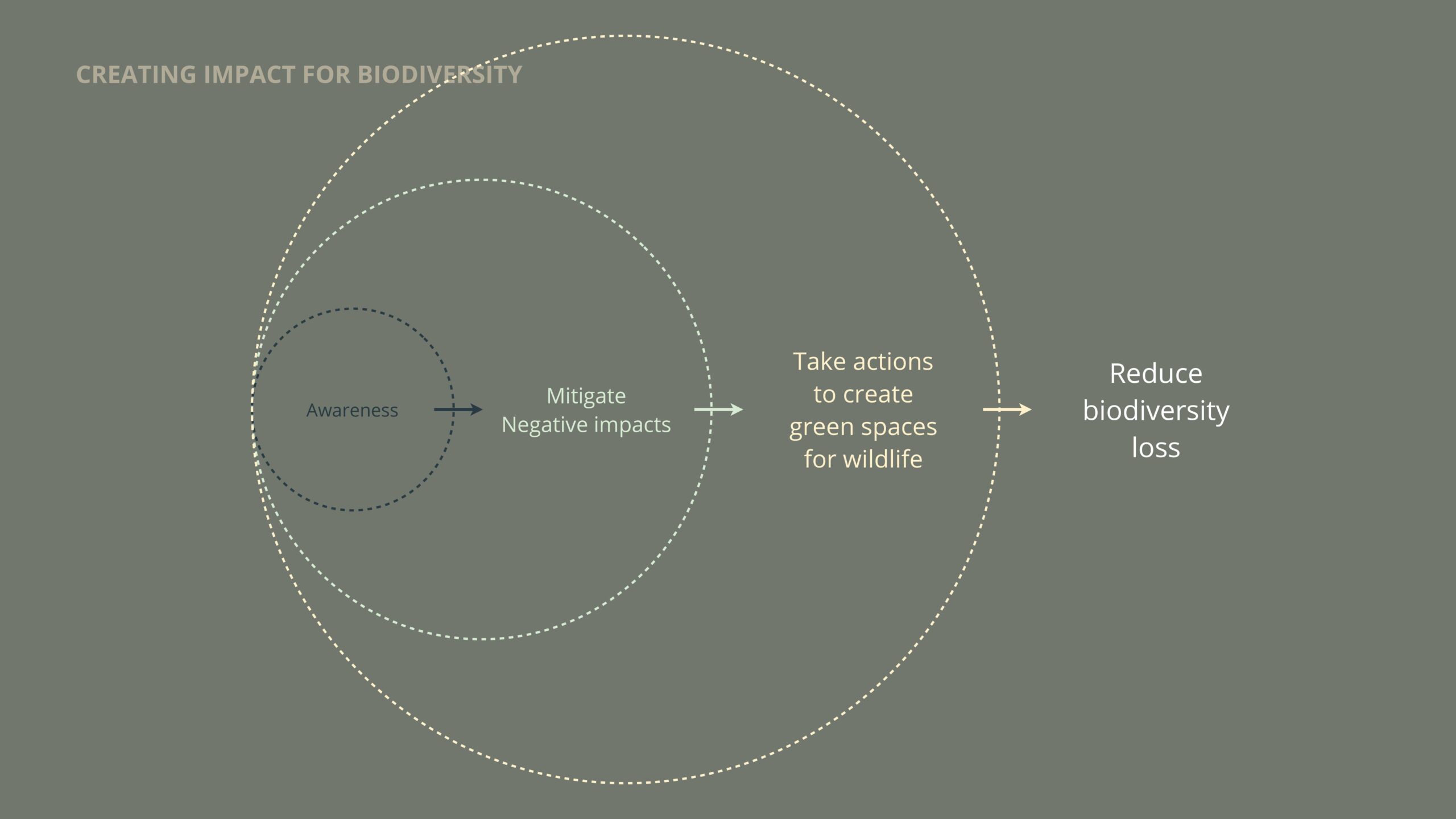
Quotes
“It is classy, and Danny likes it. It’s all sort of very clean and appealing.”
Melissa, mother of a child, 8 years old“I thought the branding was excellent because it was simple and stylish. It made bird watching look quite cool. I really enjoyed going out with the kids and learning to look and listen. It was a slowing down and a mindful experience which we all need right now.”
Jodi, mother of 4 children, 6-13 years old“My kids loved the idea of the AR information. It can help them see the natural world with new eyes and they are at the age when’re iPads and phones are exciting!”
Neil, father of 2 children, 8-10 years old